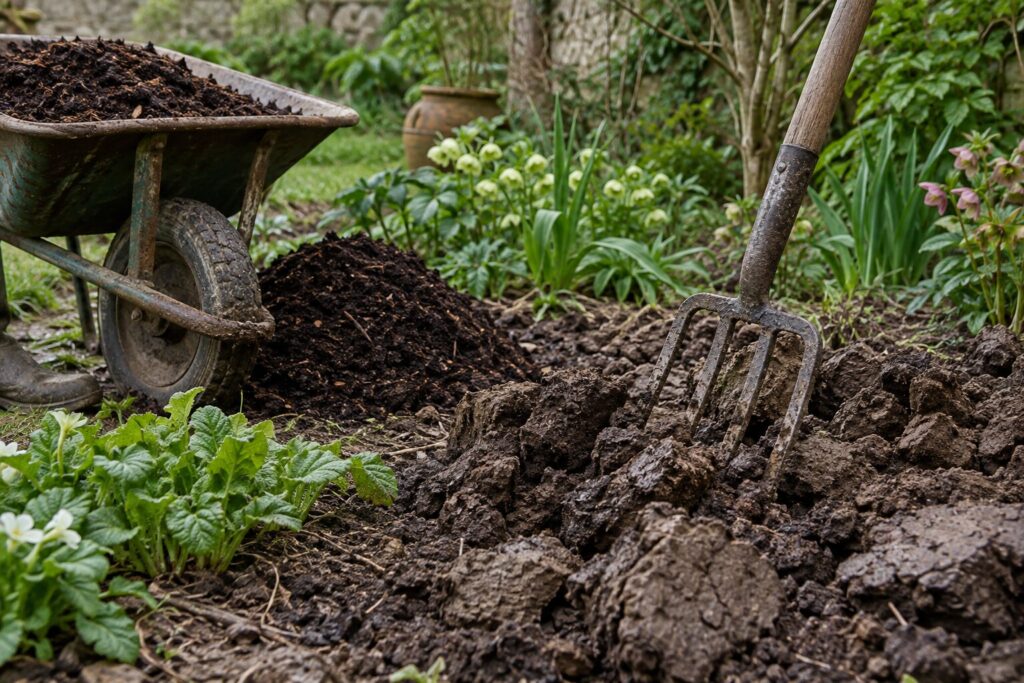
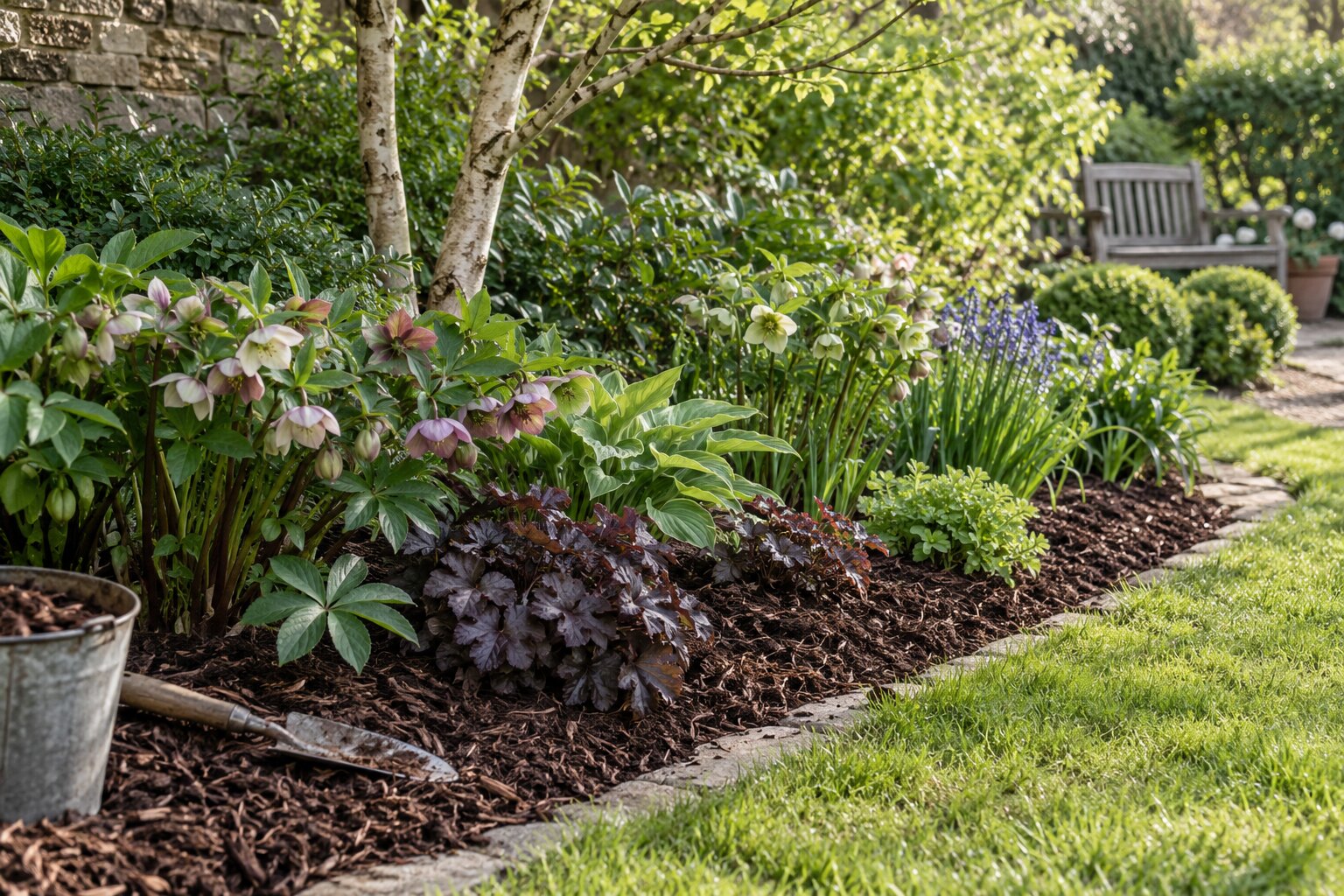
Mulching is one of the simplest ways to improve the conditions around established plants. A layer of material placed over the soil surface can reduce moisture loss, suppress some weeds, protect the surface from heavy rain and gradually add organic matter.
The benefit depends on using the right material, at the right depth and at the right time.
When is the best time to mulch?
Spring and autumn are both useful periods. In spring, mulch can help conserve moisture before warmer weather arrives. In autumn, soil is often still relatively warm and moist, and organic material can begin settling into the border over winter.
Avoid applying a thick mulch over soil that is extremely dry. Water first or wait for useful rainfall so moisture is present below the surface.
Prepare the border first
Remove established perennial weeds before mulching. Mulch can suppress small annual weeds, but it will not permanently solve vigorous bindweed, couch grass or other persistent roots beneath the surface.
Also remove thick mats of fallen material where disease is a concern.
Which material should you use?
Well-rotted garden compost, leaf mould and composted bark are common organic options. Each behaves differently. Compost breaks down relatively quickly and contributes organic matter, while coarser bark products can remain visible longer.
The best material depends on the planting, the desired appearance and what is available locally.
How deep should mulch be?
A token dusting disappears quickly and does little to suppress weeds. A useful mulch generally needs enough depth to form a continuous layer, often several centimetres.
More is not always better. Very deep material can bury small plants and crowns or create unsuitable conditions around stems.
Keep mulch away from crowns and woody stems
Do not heap mulch directly against tree trunks, shrub stems or the crowns of perennials. Leave a small clear space around vulnerable plant bases.
This keeps the natural relationship between stem and soil intact and avoids creating continuously damp material against bark.
Spread it over the whole useful area
Mulch works best as a surface treatment, not as isolated piles around individual plants. Spread it evenly through the border where practical.
Work around emerging bulbs and low plants rather than covering them blindly.
Do you need to dig mulch in?
Usually not. Leaving organic mulch on the surface allows natural soil processes to incorporate it gradually. Worms and other organisms move material downward over time.
This approach also protects soil structure by reducing unnecessary cultivation.
Mulch and slugs
Organic mulch creates a cooler, moister surface environment, which can also provide shelter for slugs. This does not mean mulch should automatically be avoided, but young vulnerable plants may need closer monitoring.
Keep mulch slightly away from the smallest seedlings and inspect susceptible areas regularly.
Mulch is not fertiliser
Some organic mulches contribute nutrients as they break down, but their main purpose is often soil protection and organic matter. Do not assume a mulch provides every nutrient a plant might need.
Repeat when necessary
Organic mulches decompose and become part of the soil. That is useful, but it means the visible layer becomes thinner over time. Check borders each year and top up where needed rather than following a fixed calendar regardless of conditions.
A simple habit with cumulative results
Regular mulching can reduce watering pressure, moderate soil conditions and gradually improve the upper layer of a border. Done consistently, it is one of the least disruptive ways to improve garden soil.
Read more in A simple guide to garden compost, Watering the garden in dry weather and Slugs in the garden.