
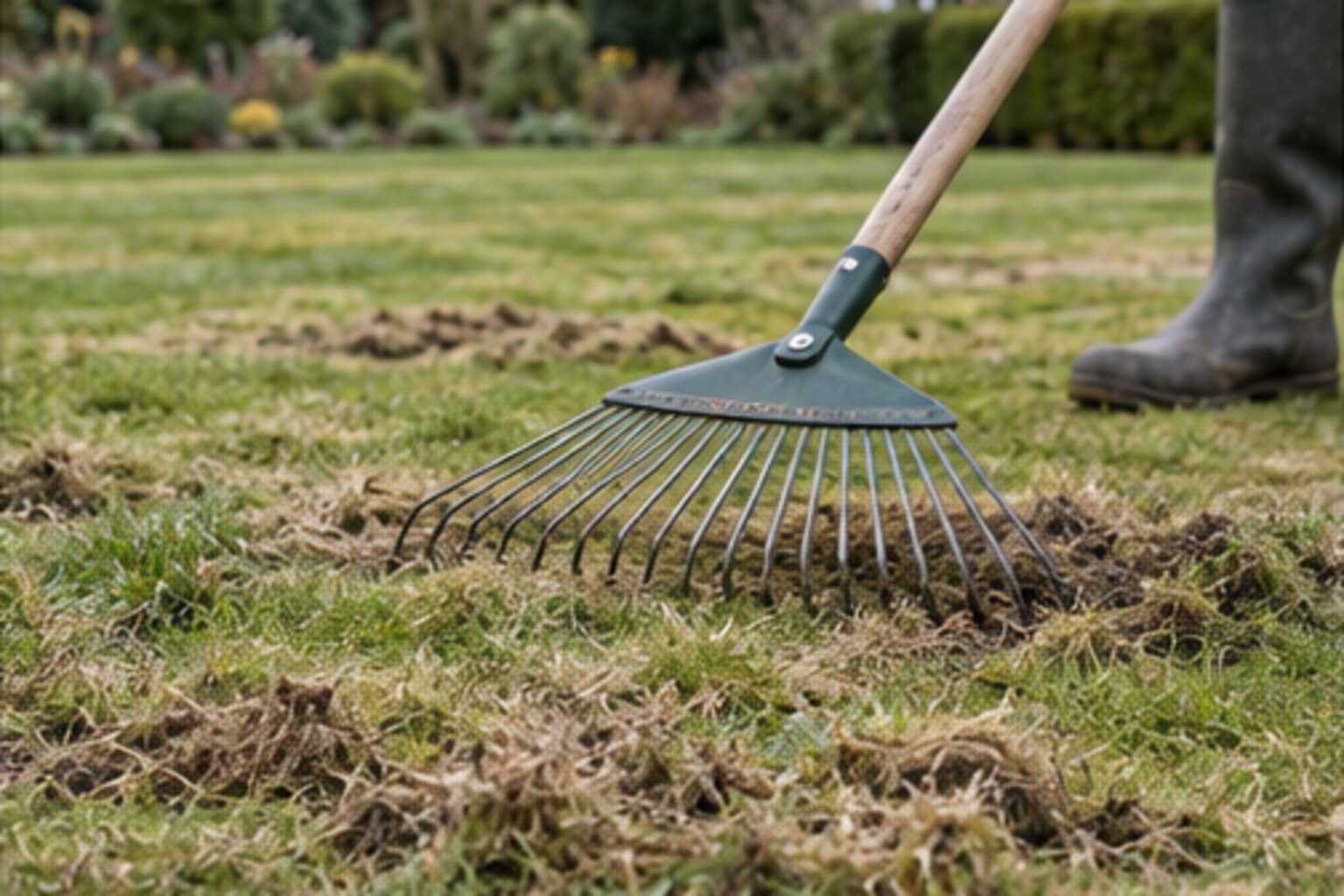
A lawn does not need to be perfect to be useful. Wear, compacted soil, thin grass and patches of moss or weeds are normal in a garden that is actually used. Before replacing an entire lawn, it is often worth renovating what is already there.
Spring and early autumn are useful renovation periods because grass can grow actively while temperatures are moderate and soil moisture is easier to maintain.
First decide what is wrong
Thin grass can have several causes: shade, compaction, drought, poor drainage, low fertility, heavy wear or mowing too short. Renovation works best when it addresses the cause rather than merely adding more seed.
Walk the lawn and note where problems occur. A patch under dense tree shade needs a different solution from a worn path across an otherwise healthy lawn.
1. Mow before you begin
Cut the lawn moderately short so you can reach the surface easily, but avoid scalping it. Collect heavy clippings if they would interfere with the work.
2. Remove excessive thatch and dead material
Raking or scarifying can remove dead grass, moss and accumulated organic material from the surface. Do not assume every lawn needs aggressive scarification. A healthy lawn with little thatch may need only light raking.
After this stage, the lawn can look worse temporarily. That is normal if a large amount of dead material has been removed.
3. Relieve compaction
Where the soil is compacted, aeration creates channels for air, water and roots. A garden fork can be adequate for a small lawn, while larger areas may justify a mechanical aerator.
Concentrate effort where traffic is heaviest rather than treating every square metre identically.
4. Overseed thin areas
Choose a grass seed mixture suited to the conditions. Lawns in shade, family lawns and fine ornamental lawns need different mixtures.
Seed must make contact with soil. Rake thin areas lightly, distribute seed evenly and press or firm it so it is not simply sitting on top of dead material.
5. Top dress where appropriate
A light suitable top dressing can help level small imperfections and improve seed-to-soil contact. Avoid burying existing grass beneath a thick layer.
6. Keep new seed moist
Germinating seed cannot tolerate repeated drying. Water gently and consistently until seedlings are established. Avoid heavy watering that washes seed into low spots.
Do not mow new grass too soon
Wait until the seedlings are tall and sufficiently rooted before the first cut. Use sharp mower blades and remove only a small portion of the height.
Review mowing height
Repeatedly cutting grass extremely short weakens it and makes dry weather more difficult. In many ordinary gardens, leaving the lawn slightly longer improves root depth and helps the grass compete more successfully.
Consider whether every area needs to be lawn
A permanently failing patch under deep shade or beside a heavily used route may be telling you something about the design rather than the grass.
Alternative planting, stepping stones or a deliberately unmown area may be more successful than repeatedly repairing grass where conditions are unsuitable.
Renovation before replacement
Unless a lawn is fundamentally unsuitable or badly contaminated with perennial weeds, renovation is often faster, cheaper and less disruptive than removing everything and starting again.
See also Watering the garden in dry weather and Should you leave part of the lawn unmown?.