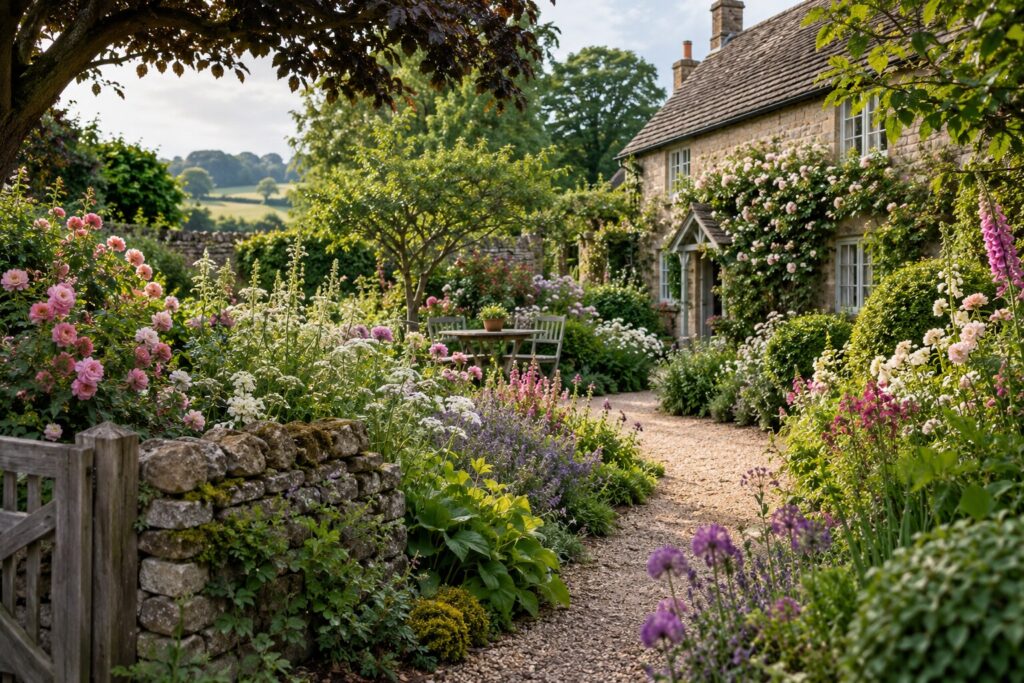
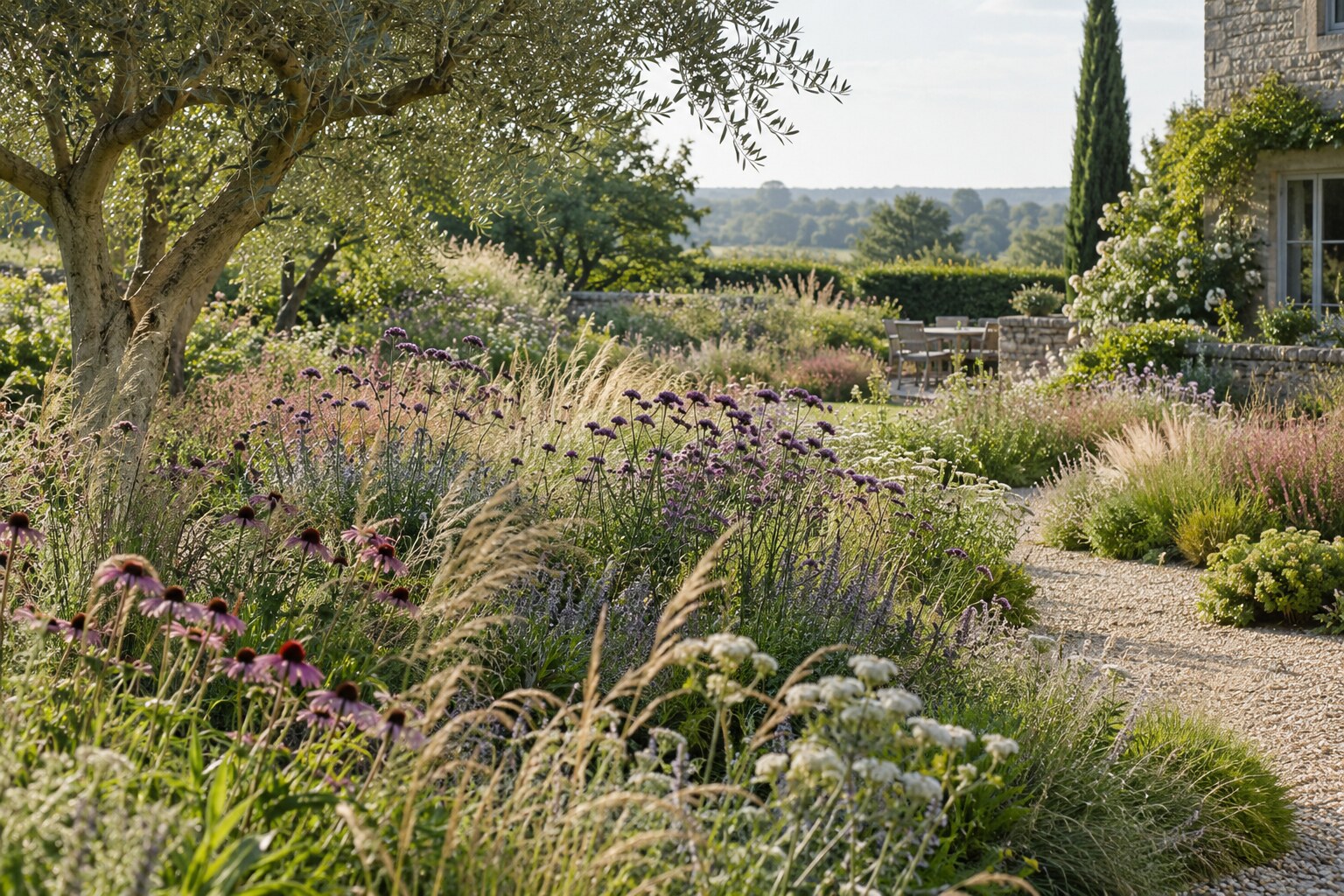
Naturalistic planting is often admired because it appears relaxed and spontaneous. Grasses move in the wind, perennials weave through one another and the planting seems to change almost without intervention. Yet the strongest schemes are usually carefully designed. Repetition, plant behaviour, proportion and suitability to the site are what allow the apparent looseness to work.
Naturalistic is not the same as random
A large collection of unrelated plants rarely creates a naturalistic effect. In nature, plants often appear repeatedly in communities. Garden planting benefits from the same principle.
Choose a limited palette and repeat key species in loose groups or drifts. The repetitions do not have to be symmetrical. Their purpose is to create rhythm and continuity.
Choose plants that want to be there
The closer a plant’s preferences match the conditions, the more naturally it tends to behave. Soil, drainage, light, exposure and moisture should therefore guide the scheme before colour does.
Plants that are comfortable in their position often establish more strongly, require less intervention and combine more convincingly with their neighbours.
Design with form, not just flowers
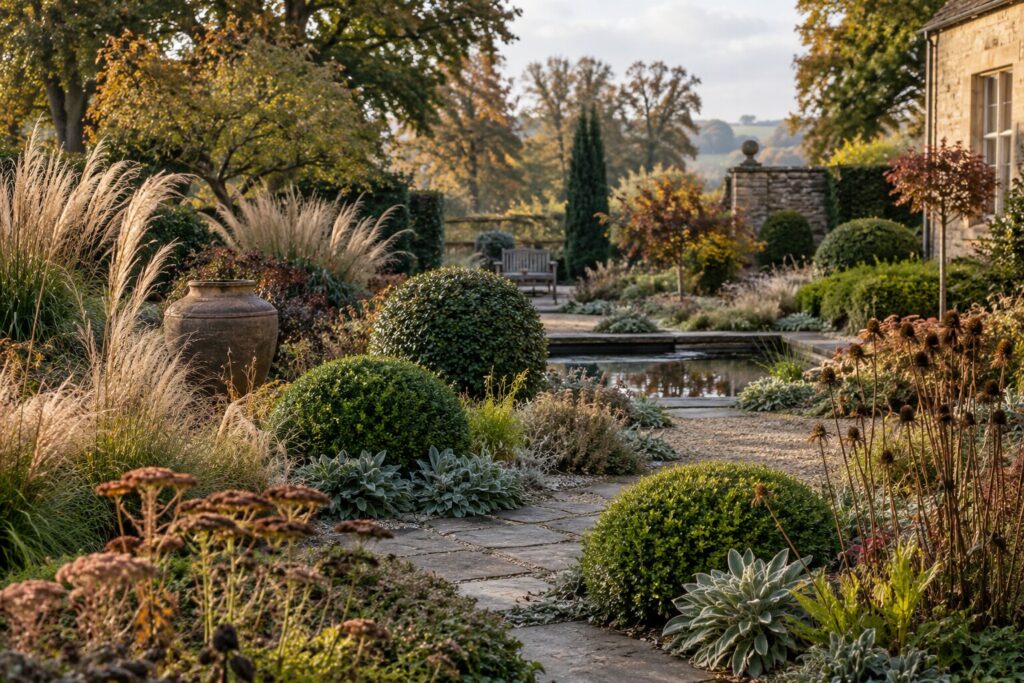
Naturalistic planting becomes especially interesting when different plant shapes are combined. Fine grasses can sit beside broad foliage. Upright flower spikes can rise through softer mounds. Flat or rounded seedheads can contrast with airy branching stems.
These forms remain relevant beyond peak flowering, which is one reason naturalistic schemes can be so effective from late summer into winter.
Allow plants to overlap
Traditional border planting can treat each plant as an isolated object. Naturalistic planting is often more successful when neighbouring plants overlap and intermingle. The transition between species becomes less obvious and the border reads as a community rather than a collection.
Think about movement
Grasses and plants with fine stems can bring movement into a garden. The effect is subtle but important. A border that responds to wind and changing light feels different throughout the day.
Do not cut the story short
Fading is part of this style. Seedheads, dry grasses and standing perennial stems can remain beautiful long after the flowers have gone. They also reveal the seasonal cycle of the garden rather than hiding it.
Leaving selected material through autumn and winter can benefit wildlife too. Making more room for wildlife explores this wider approach.
Naturalistic planting still needs editing
A garden is not a wild plant community. Some plants will become too dominant, seedlings will appear in awkward places and paths need to remain clear. Editing is therefore part of the process.
The distinction is that editing should preserve the character of the planting rather than forcing everything back into rigid individual clumps.
For wider seasonal planning, see Planting a garden for the seasons and Should you leave part of the lawn unmown?.