
Category: Borders & Planting Design

  • Creating Year-Round Interest

    Creating Year-Round Interest

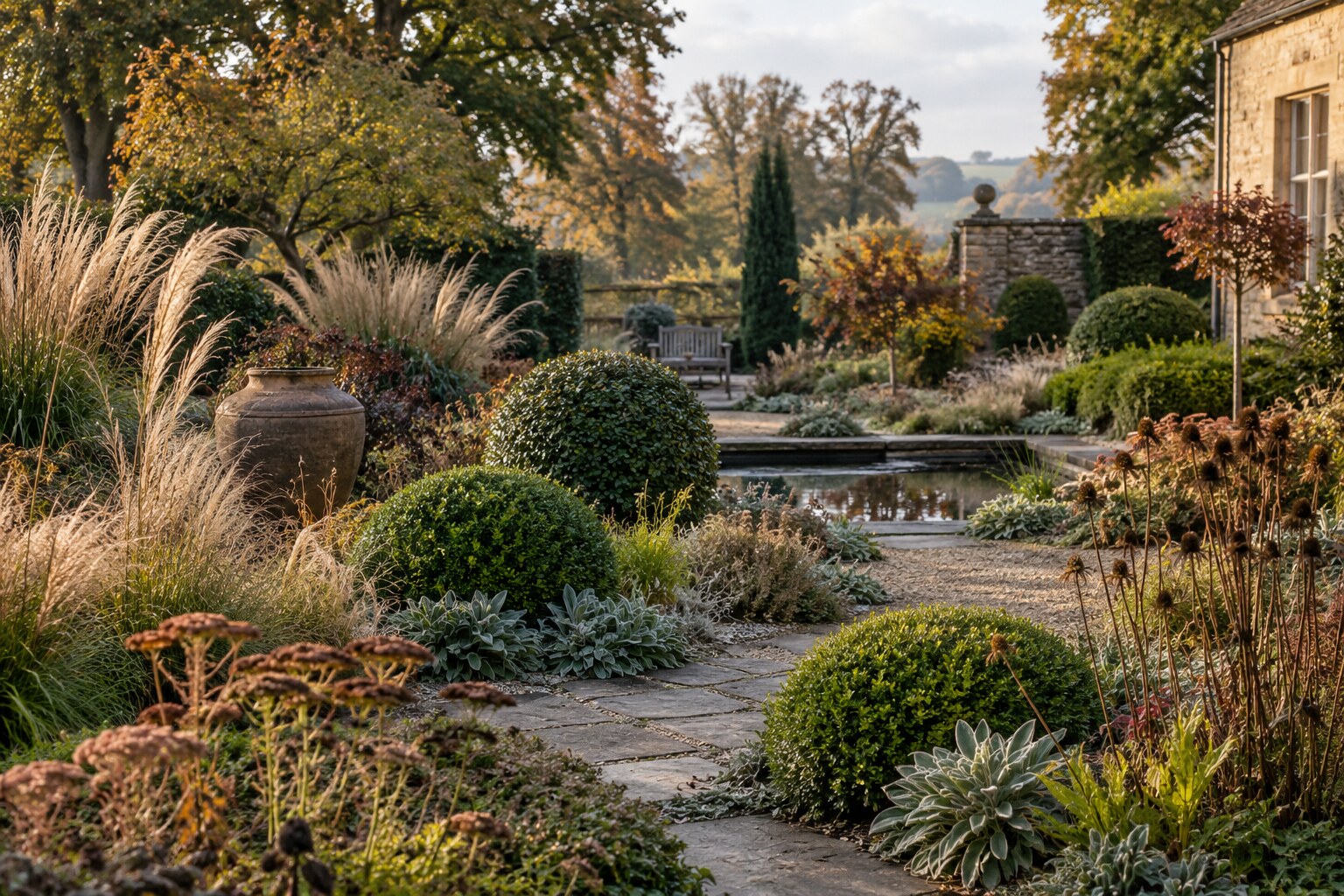
    A garden with year-round interest is not a garden that flowers continuously. Trying to force twelve months of bloom often creates an unnecessarily complicated planting scheme. A more convincing garden uses structure, foliage, bark, stems, seedheads, seasonal colour and carefully timed flowers so that there is always something worth noticing.

    Start with what remains

    Trees, hedges, shrubs, walls, paths and other permanent elements form the garden’s underlying composition. They are particularly important between late autumn and early spring, when many herbaceous plants have disappeared.

    A garden does not need to be dominated by evergreen plants, but a few well-positioned permanent shapes can prevent it from feeling empty in winter.

    Think in seasonal layers

    Instead of asking what flowers all year, ask what carries each part of the year. Bulbs and fresh foliage may dominate early spring. Flowering shrubs and perennials can build through late spring and summer. Later perennials, berries, grasses and autumn foliage then take over.

    The garden does not need to peak everywhere at once. In fact, it is usually more interesting when different areas become important at different times.

    Use foliage as part of the design

    Leaves are present for much longer than most flowers. Their size, colour and shape therefore have an enormous influence on the character of a border. Broad leaves beside fine grasses, dark green beside silver or fresh lime green, and glossy foliage beside softer textures can create interest without relying on bloom.

    Let the garden age into autumn

    Some of the strongest late-season gardens are those where plants are allowed to change visibly. Seedheads, dry stems and fading grasses can continue to contribute structure. Low autumn light often makes these forms more beautiful rather than less.

    This does not mean leaving everything untouched. Remove material that has collapsed unpleasantly or is diseased, but consider whether a standing stem still contributes before cutting it down.

    See What to do with fallen leaves for a similarly selective approach to autumn clearing.

    Use winter to read the garden

    Winter is one of the best times to judge the structure of a garden. With fewer flowers competing for attention, paths, boundaries, trees and open space become much clearer. Weak areas also reveal themselves.

    If the garden looks completely empty from December to February, the answer may not be more flowers. It may need a stronger shrub, a small tree, a hedge or simply a better-defined path.

    Photograph the garden through the year

    Memory tends to favour the garden at its best. Taking a photograph from the same position every month gives a much more useful record. It quickly shows where long gaps occur and prevents unnecessary additions to areas that are already performing well.

    Fill genuine gaps slowly

    Year-round interest is usually built over several seasons. Observe first, then introduce plants or structure where there is a clear need. A single well-chosen addition can sometimes transform an entire period of the year.

    Continue with Planting a garden for the seasons, Planting bulbs for spring and Preparing the garden for winter.
  • The Beauty of Naturalistic Planting

    The Beauty of Naturalistic Planting

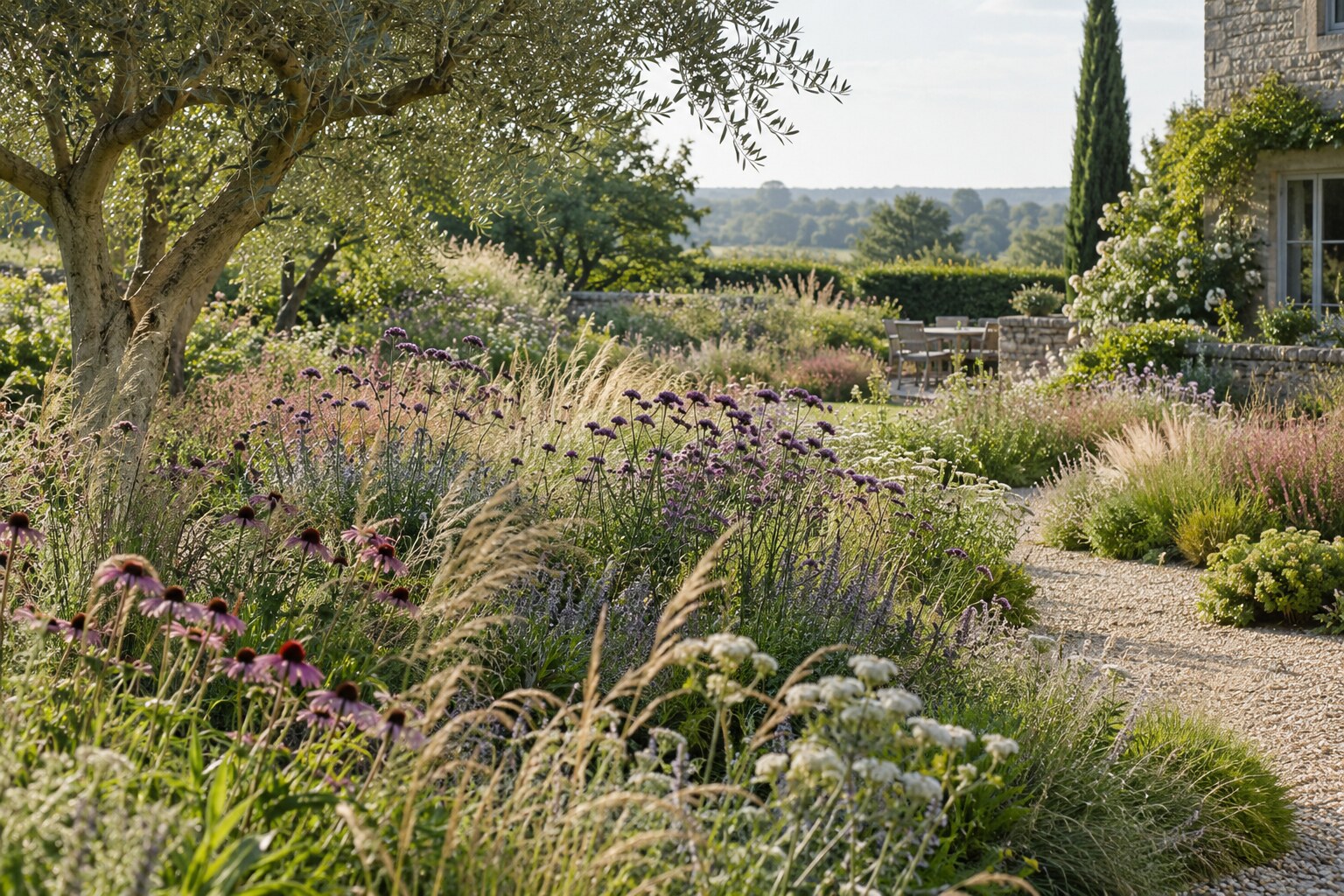
    Naturalistic planting is often admired because it appears relaxed and spontaneous. Grasses move in the wind, perennials weave through one another and the planting seems to change almost without intervention. Yet the strongest schemes are usually carefully designed. Repetition, plant behaviour, proportion and suitability to the site are what allow the apparent looseness to work.

    Naturalistic is not the same as random

    A large collection of unrelated plants rarely creates a naturalistic effect. In nature, plants often appear repeatedly in communities. Garden planting benefits from the same principle.

    Choose a limited palette and repeat key species in loose groups or drifts. The repetitions do not have to be symmetrical. Their purpose is to create rhythm and continuity.

    Choose plants that want to be there

    The closer a plant’s preferences match the conditions, the more naturally it tends to behave. Soil, drainage, light, exposure and moisture should therefore guide the scheme before colour does.

    Plants that are comfortable in their position often establish more strongly, require less intervention and combine more convincingly with their neighbours.

    Design with form, not just flowers

    Naturalistic planting becomes especially interesting when different plant shapes are combined. Fine grasses can sit beside broad foliage. Upright flower spikes can rise through softer mounds. Flat or rounded seedheads can contrast with airy branching stems.

    These forms remain relevant beyond peak flowering, which is one reason naturalistic schemes can be so effective from late summer into winter.

    Allow plants to overlap

    Traditional border planting can treat each plant as an isolated object. Naturalistic planting is often more successful when neighbouring plants overlap and intermingle. The transition between species becomes less obvious and the border reads as a community rather than a collection.

    Think about movement

    Grasses and plants with fine stems can bring movement into a garden. The effect is subtle but important. A border that responds to wind and changing light feels different throughout the day.

    Do not cut the story short

    Fading is part of this style. Seedheads, dry grasses and standing perennial stems can remain beautiful long after the flowers have gone. They also reveal the seasonal cycle of the garden rather than hiding it.

    Leaving selected material through autumn and winter can benefit wildlife too. Making more room for wildlife explores this wider approach.

    Naturalistic planting still needs editing

    A garden is not a wild plant community. Some plants will become too dominant, seedlings will appear in awkward places and paths need to remain clear. Editing is therefore part of the process.

    The distinction is that editing should preserve the character of the planting rather than forcing everything back into rigid individual clumps.

    For wider seasonal planning, see Planting a garden for the seasons and Should you leave part of the lawn unmown?.