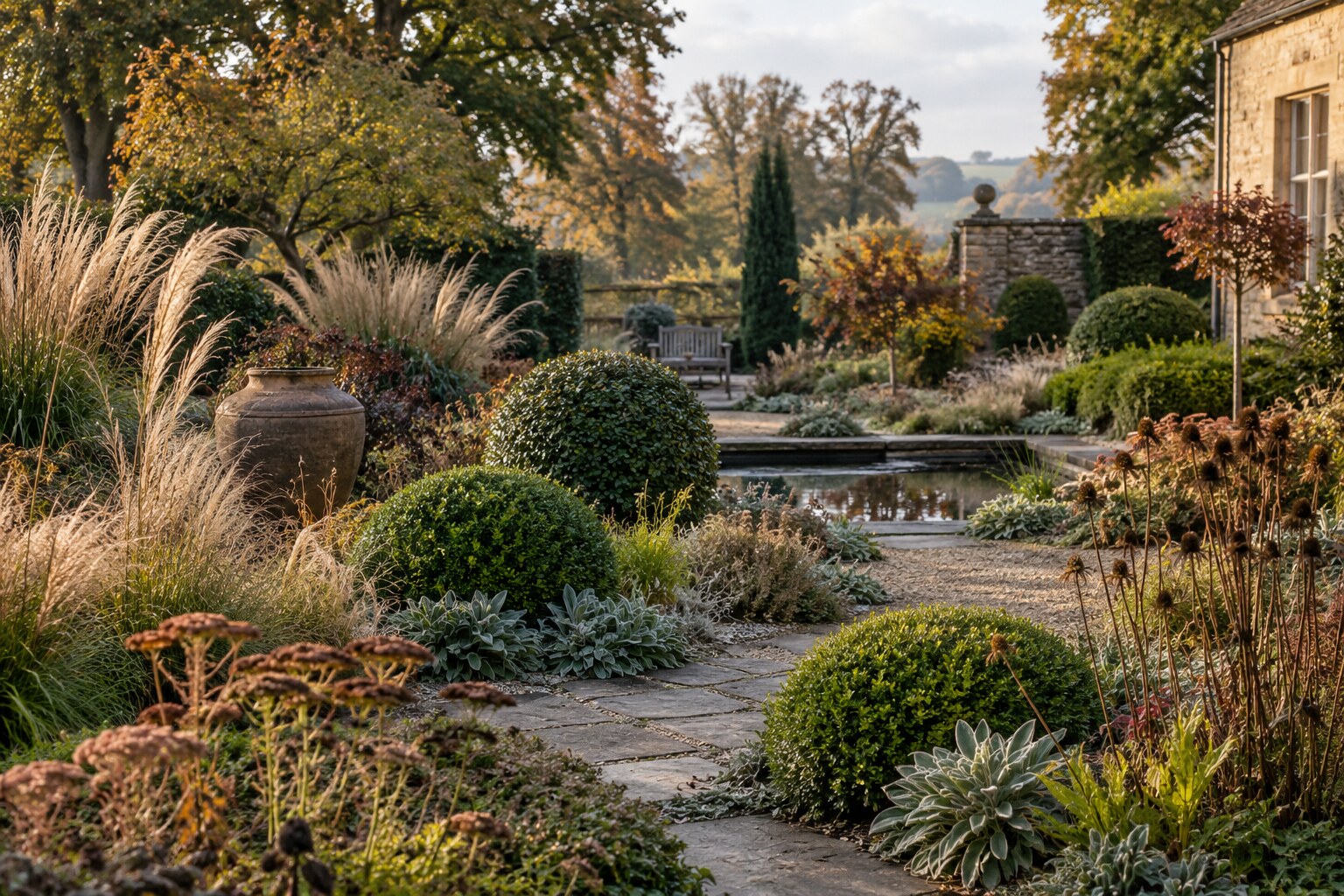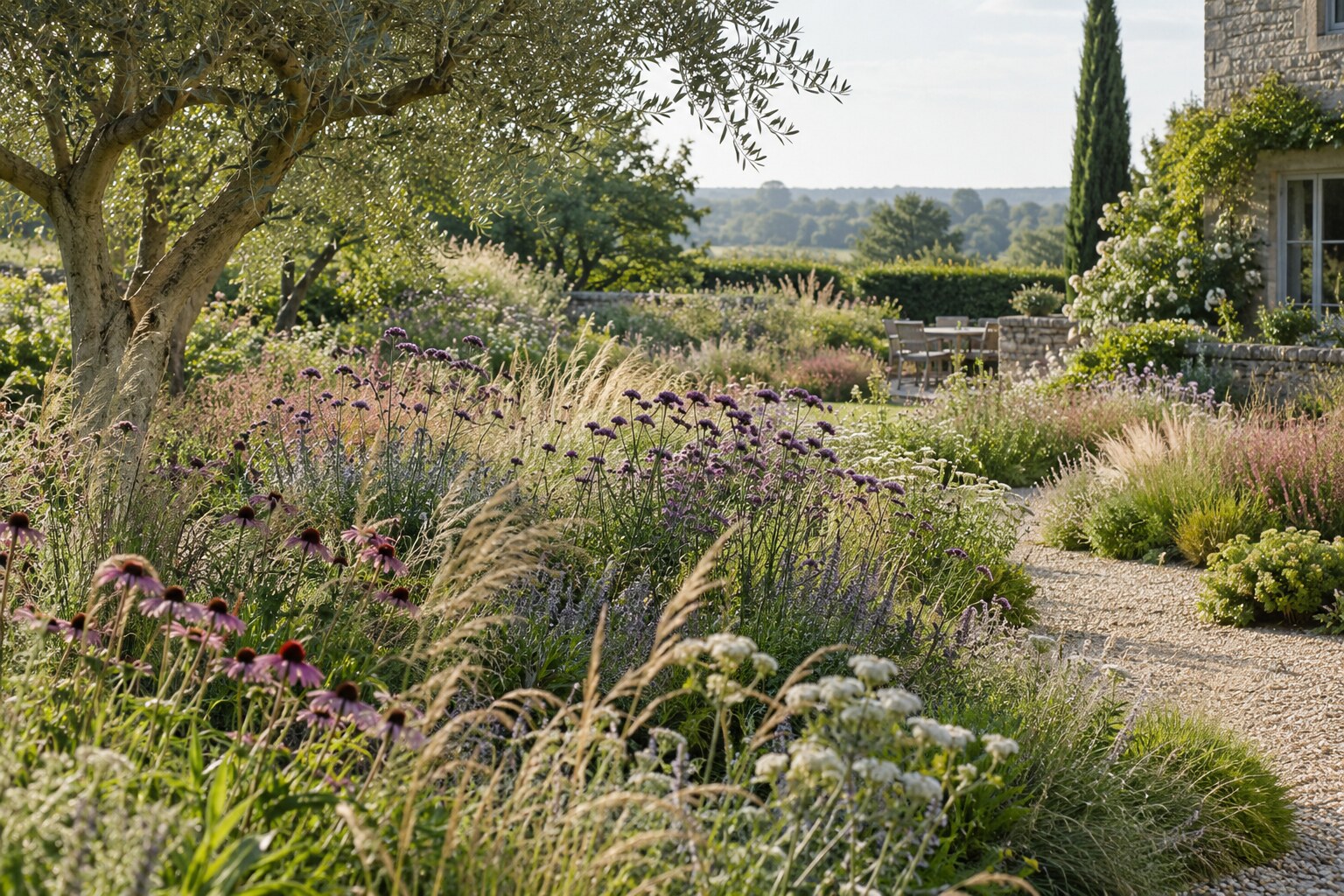
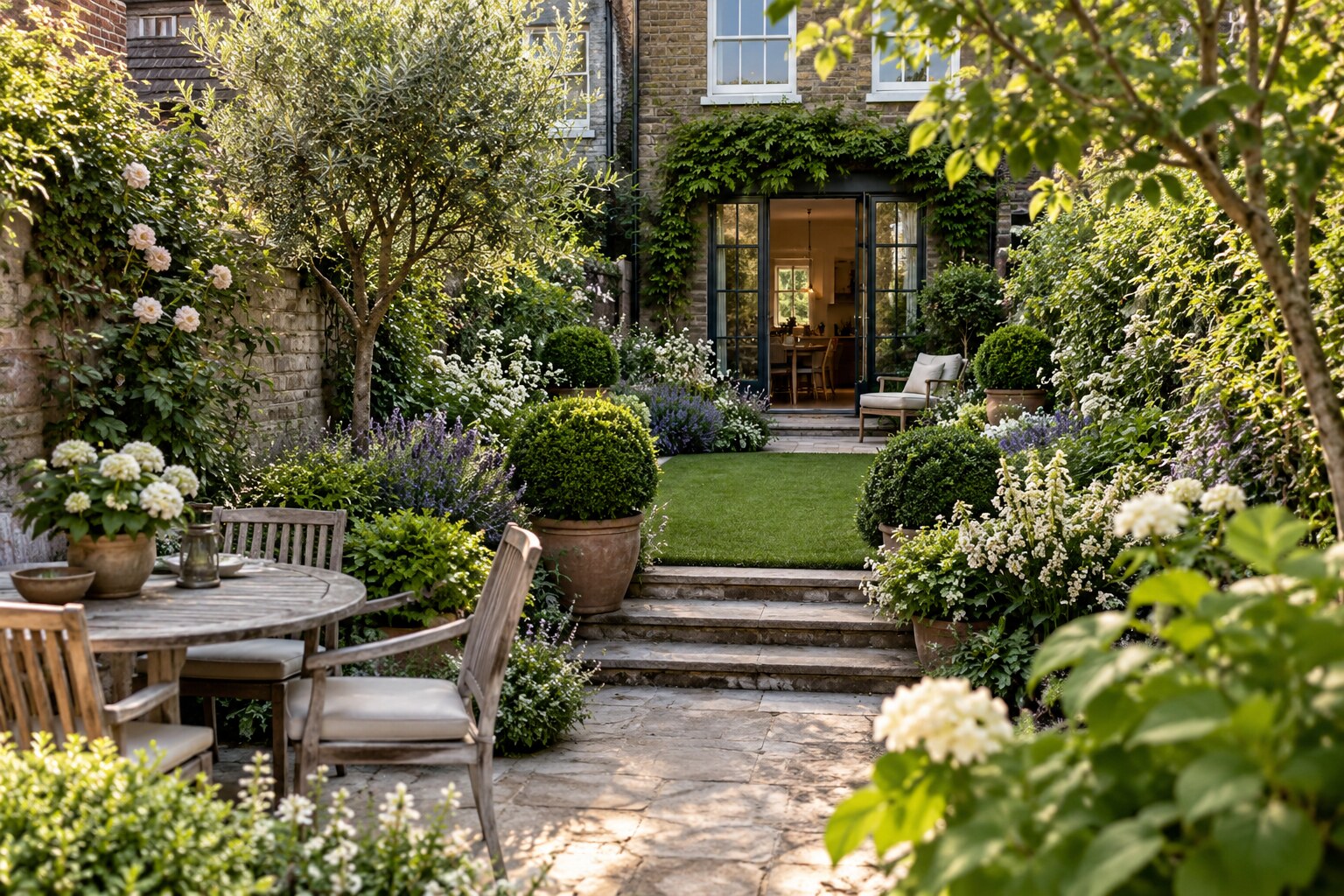
A small garden does not have to feel like a reduced version of a larger one. Limited space can produce some of the strongest garden design because every path, plant, view and material has to earn its place. The most successful compact gardens tend to feel generous not because they contain more, but because the elements work together.
The starting point is rarely decoration. It is structure: where you move, where you pause, what you see from the house and which parts of the boundary should disappear into planting.
Give the garden one clear idea
Small spaces become visually crowded very quickly. A strong garden therefore benefits from one dominant idea rather than several competing themes. It might be a generous planted border, a long view towards a small tree, an intimate place to sit or a path that draws the eye through the garden.
Once that main idea is established, the other elements can support it. This restraint makes the garden feel considered and often makes the available space appear larger.
Use proportion rather than miniature everything
A common mistake in a compact garden is to make every element small. Narrow borders, tiny paving units and many small pots can emphasise the lack of space. One generously sized terrace, a deep border or a substantial planter can create a much calmer result.
The same applies to plants. A small tree or a well-chosen structural shrub can give a garden greater depth than a collection of low plants that all occupy the same visual layer.
Plant upwards as well as outwards
Height is particularly valuable where ground space is limited. Climbers, trained shrubs, narrow trees and tall perennials can create a sense of enclosure and abundance without consuming the entire footprint.
Layer planting from canopy to ground level. A small tree might sit above shrubs, perennials and lower groundcover. These overlapping levels give a garden the richness of a much larger planting scheme.
Repeat plants and materials
Repetition is one of the simplest ways to make a compact garden feel coherent. Rather than placing a different plant in every available gap, repeat several reliable species through the borders. The eye recognises the pattern and moves more easily through the space.
Materials benefit from the same discipline. One paving material repeated from the house into the garden, or one consistent edging detail, can visually connect different areas.
Treat boundaries as part of the composition
Walls and fences are always close in a small garden, which makes them unusually important. Climbers, hedging, trained fruit or shrubs planted in front of a boundary can soften it and make the garden feel less contained.
That does not mean every wall needs to disappear. A beautifully finished wall or fence can provide the calm backdrop against which loose planting becomes more effective.
Create depth with partial views
If the whole garden can be understood from the back door, it often feels smaller. A planting group, small tree, hedge or change in direction can conceal part of the space and encourage the eye to look beyond what is immediately visible.
Even a subtle interruption can create the impression that the garden continues further than it does.
Let planting soften the design
The underlying layout can be simple and architectural while the planting remains relaxed. Allow foliage to spill slightly onto paths, soften the base of walls and overlap hard edges. This contrast between structure and abundance is especially effective in smaller gardens.
For more practical ideas, see Making the most of a small garden, Why raised beds remain useful and Large rectangular metal planters.