Category: Journal

  • Small Gardens with Big Impact

    Small Gardens with Big Impact

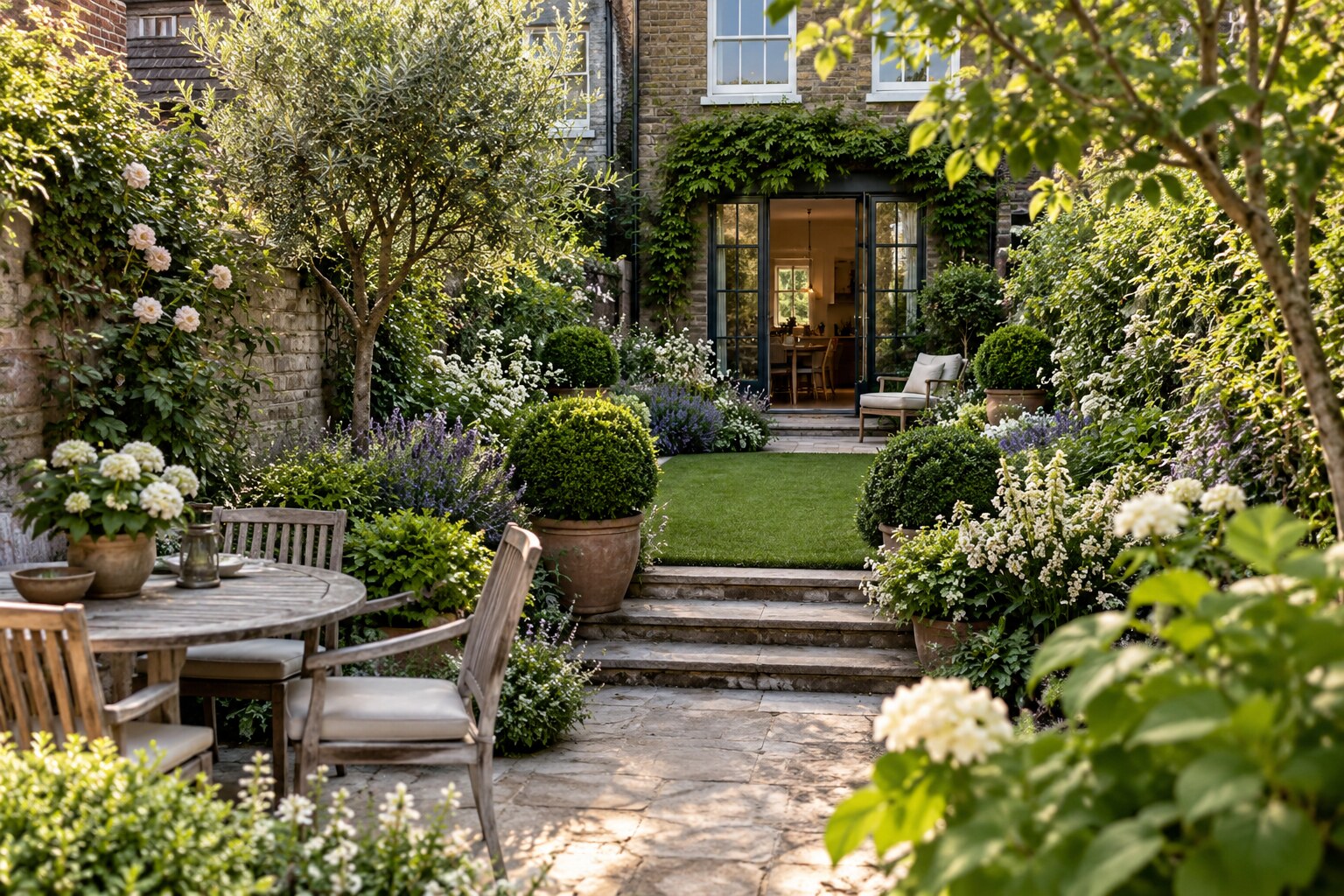
    A small garden does not have to feel like a reduced version of a larger one. Limited space can produce some of the strongest garden design because every path, plant, view and material has to earn its place. The most successful compact gardens tend to feel generous not because they contain more, but because the elements work together.

    The starting point is rarely decoration. It is structure: where you move, where you pause, what you see from the house and which parts of the boundary should disappear into planting.

    Give the garden one clear idea

    Small spaces become visually crowded very quickly. A strong garden therefore benefits from one dominant idea rather than several competing themes. It might be a generous planted border, a long view towards a small tree, an intimate place to sit or a path that draws the eye through the garden.

    Once that main idea is established, the other elements can support it. This restraint makes the garden feel considered and often makes the available space appear larger.

    Use proportion rather than miniature everything

    A common mistake in a compact garden is to make every element small. Narrow borders, tiny paving units and many small pots can emphasise the lack of space. One generously sized terrace, a deep border or a substantial planter can create a much calmer result.

    The same applies to plants. A small tree or a well-chosen structural shrub can give a garden greater depth than a collection of low plants that all occupy the same visual layer.

    Plant upwards as well as outwards

    Height is particularly valuable where ground space is limited. Climbers, trained shrubs, narrow trees and tall perennials can create a sense of enclosure and abundance without consuming the entire footprint.

    Layer planting from canopy to ground level. A small tree might sit above shrubs, perennials and lower groundcover. These overlapping levels give a garden the richness of a much larger planting scheme.

    Repeat plants and materials

    Repetition is one of the simplest ways to make a compact garden feel coherent. Rather than placing a different plant in every available gap, repeat several reliable species through the borders. The eye recognises the pattern and moves more easily through the space.

    Materials benefit from the same discipline. One paving material repeated from the house into the garden, or one consistent edging detail, can visually connect different areas.

    Treat boundaries as part of the composition

    Walls and fences are always close in a small garden, which makes them unusually important. Climbers, hedging, trained fruit or shrubs planted in front of a boundary can soften it and make the garden feel less contained.

    That does not mean every wall needs to disappear. A beautifully finished wall or fence can provide the calm backdrop against which loose planting becomes more effective.

    Create depth with partial views

    If the whole garden can be understood from the back door, it often feels smaller. A planting group, small tree, hedge or change in direction can conceal part of the space and encourage the eye to look beyond what is immediately visible.

    Even a subtle interruption can create the impression that the garden continues further than it does.

    Let planting soften the design

    The underlying layout can be simple and architectural while the planting remains relaxed. Allow foliage to spill slightly onto paths, soften the base of walls and overlap hard edges. This contrast between structure and abundance is especially effective in smaller gardens.

    For more practical ideas, see Making the most of a small garden, Why raised beds remain useful and Large rectangular metal planters.
  • Cottage Garden Inspiration

    Cottage Garden Inspiration

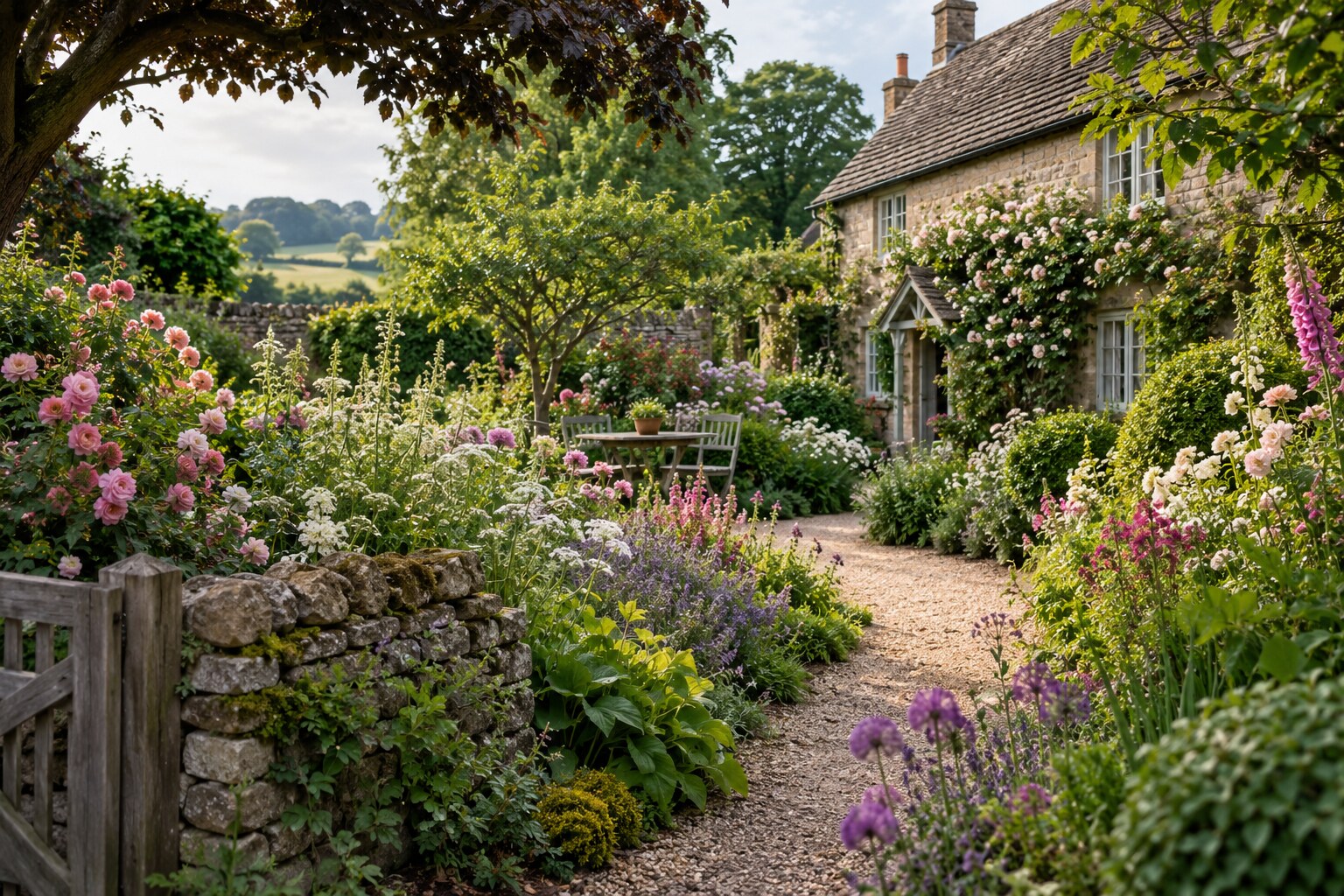
    Cottage gardens are loved for their abundance: flowers leaning into paths, roses climbing through structures and different plants appearing to mingle almost by accident. Yet the gardens that feel most convincing are rarely accidental. Underneath the apparent informality is usually a clear framework of paths, hedges, walls, gates and repeated planting.

    That balance between order and looseness is what makes the style so enduring. Structure keeps the garden readable; planting gives it life.

    Begin with a framework

    A cottage garden can tolerate an extraordinary amount of planting when its underlying structure is simple. A straight brick path, a gravel route between deep borders, a low hedge or a painted gate can provide enough order for plants to spill and self-seed without the garden feeling chaotic.

    In a small garden, even one strong path may be sufficient. In a larger space, a series of enclosed areas can create the intimacy associated with traditional cottage gardens.

    Build the planting in layers

    The classic cottage border is not a flat row of flowers. It contains height and depth. Roses, climbers or taller shrubs create the upper layer. Foxgloves, delphiniums, verbascums or ornamental grasses can rise through the middle. Hardy geraniums, catmint, alchemilla and other lower plants soften the front of the border.

    These plants do not have to be traditional. The principle matters more than the exact palette: combine different heights and shapes so that the planting feels full without becoming shapeless.

    Repeat key plants

    Abundance becomes convincing when certain plants recur. A rose repeated along a boundary, the same geranium appearing in several places or a recurring silver foliage plant can quietly connect the whole garden.

    This repetition is what allows more spontaneous elements to appear around them. Seedlings and temporary gaps are easier to accept when the garden has a recognisable rhythm.

    Use colour with restraint

    Cottage planting is often colourful, but that does not mean every colour has to be present. Limiting the palette can make the garden feel richer rather than poorer. Soft pinks, whites and purples may create a romantic atmosphere, while stronger reds, oranges and yellows produce something warmer and more energetic.

    Green remains the most important colour. Foliage is what holds the planting together before and after flowering.

    Plan a succession, not one perfect month

    A garden that reaches its peak in June and then collapses can feel surprisingly short-lived. Bulbs can begin the season, followed by early perennials and flowering shrubs, then roses and summer plants, with later perennials, grasses and seedheads carrying the garden into autumn.

    Planting a garden for the seasons is useful when planning this kind of succession, while Planting bulbs for spring can help extend the beginning of the season.

    Mix ornament and usefulness

    Cottage gardens traditionally blurred the distinction between ornamental and useful plants. Herbs, fruit, vegetables and flowers could share the same space. That idea still works beautifully today.

    Chives, fennel, parsley and other herbs can contribute flowers and texture as well as being useful in the kitchen. See Growing herbs close to the kitchen for ideas that work particularly well in compact gardens.

    Allow some imperfection

    The attraction of this style comes partly from movement and change. A plant may lean further into the path one year. A self-sown foxglove may appear somewhere unexpected. A rose may reach into a neighbouring shrub.

    Edit when necessary, but do not remove every surprise. A cottage garden should feel cultivated without looking controlled to the centimetre.

    If you are planning the planting from scratch, continue with Choosing plants for a sunny border.

  • Creating Year-Round Interest

    Creating Year-Round Interest

    A garden with year-round interest is not a garden that flowers continuously. Trying to force twelve months of bloom often creates an unnecessarily complicated planting scheme. A more convincing garden uses structure, foliage, bark, stems, seedheads, seasonal colour and carefully timed flowers so that there is always something worth noticing.

    Start with what remains

    Trees, hedges, shrubs, walls, paths and other permanent elements form the garden’s underlying composition. They are particularly important between late autumn and early spring, when many herbaceous plants have disappeared.

    A garden does not need to be dominated by evergreen plants, but a few well-positioned permanent shapes can prevent it from feeling empty in winter.

    Think in seasonal layers

    Instead of asking what flowers all year, ask what carries each part of the year. Bulbs and fresh foliage may dominate early spring. Flowering shrubs and perennials can build through late spring and summer. Later perennials, berries, grasses and autumn foliage then take over.

    The garden does not need to peak everywhere at once. In fact, it is usually more interesting when different areas become important at different times.

    Use foliage as part of the design

    Leaves are present for much longer than most flowers. Their size, colour and shape therefore have an enormous influence on the character of a border. Broad leaves beside fine grasses, dark green beside silver or fresh lime green, and glossy foliage beside softer textures can create interest without relying on bloom.

    Let the garden age into autumn

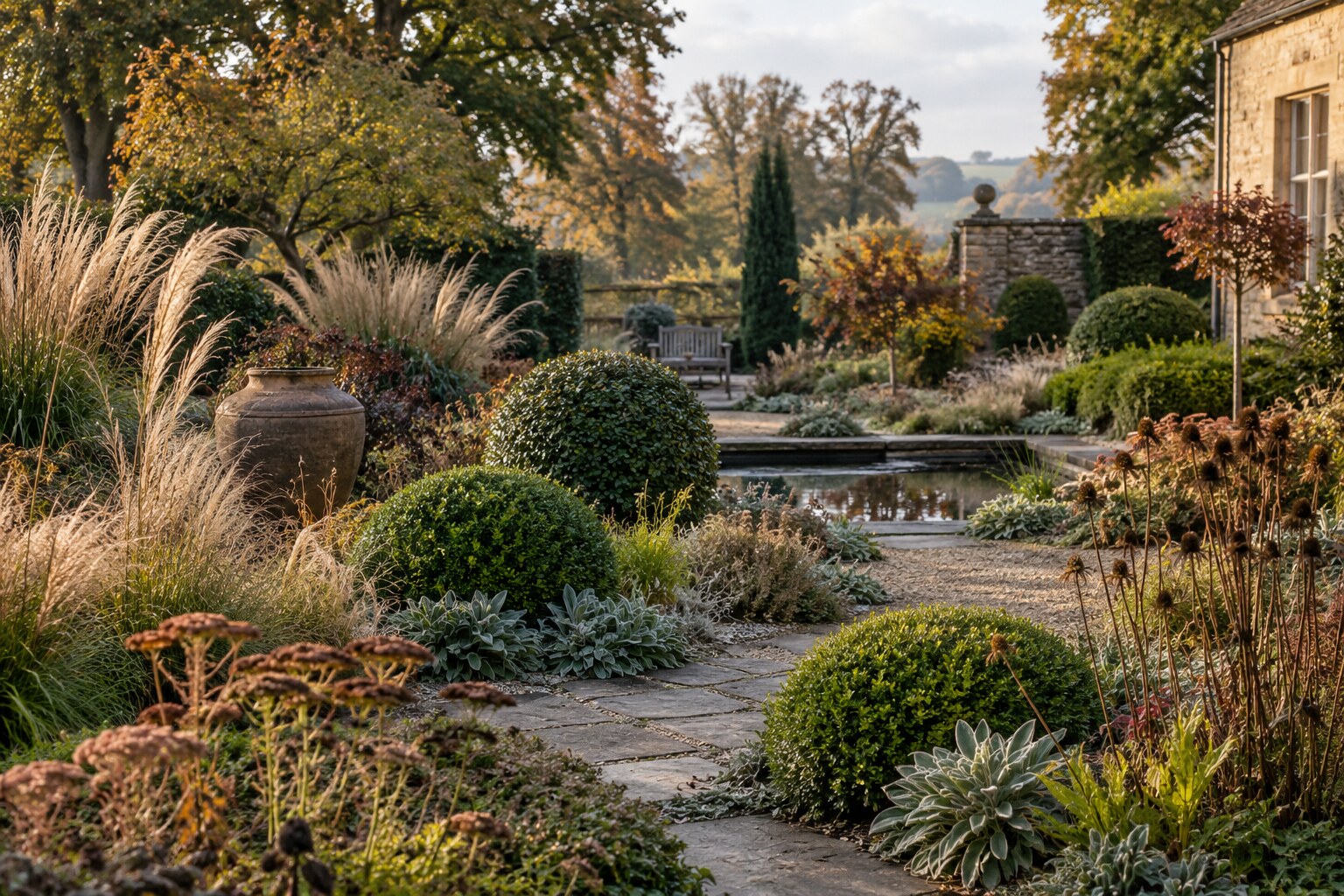
    Some of the strongest late-season gardens are those where plants are allowed to change visibly. Seedheads, dry stems and fading grasses can continue to contribute structure. Low autumn light often makes these forms more beautiful rather than less.

    This does not mean leaving everything untouched. Remove material that has collapsed unpleasantly or is diseased, but consider whether a standing stem still contributes before cutting it down.

    See What to do with fallen leaves for a similarly selective approach to autumn clearing.

    Use winter to read the garden

    Winter is one of the best times to judge the structure of a garden. With fewer flowers competing for attention, paths, boundaries, trees and open space become much clearer. Weak areas also reveal themselves.

    If the garden looks completely empty from December to February, the answer may not be more flowers. It may need a stronger shrub, a small tree, a hedge or simply a better-defined path.

    Photograph the garden through the year

    Memory tends to favour the garden at its best. Taking a photograph from the same position every month gives a much more useful record. It quickly shows where long gaps occur and prevents unnecessary additions to areas that are already performing well.

    Fill genuine gaps slowly

    Year-round interest is usually built over several seasons. Observe first, then introduce plants or structure where there is a clear need. A single well-chosen addition can sometimes transform an entire period of the year.

    Continue with Planting a garden for the seasons, Planting bulbs for spring and Preparing the garden for winter.

  • The Beauty of Naturalistic Planting

    The Beauty of Naturalistic Planting

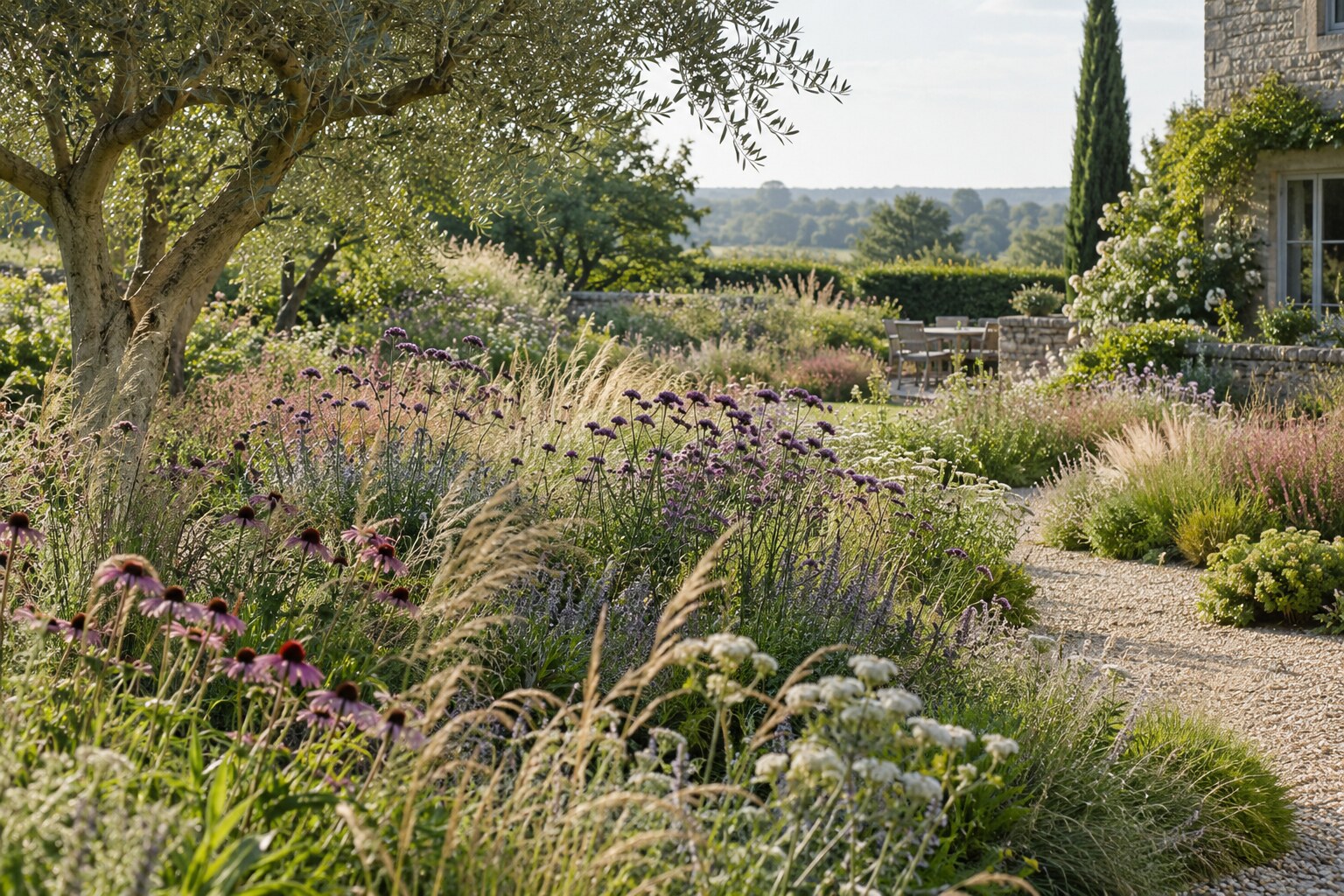
    Naturalistic planting is often admired because it appears relaxed and spontaneous. Grasses move in the wind, perennials weave through one another and the planting seems to change almost without intervention. Yet the strongest schemes are usually carefully designed. Repetition, plant behaviour, proportion and suitability to the site are what allow the apparent looseness to work.

    Naturalistic is not the same as random

    A large collection of unrelated plants rarely creates a naturalistic effect. In nature, plants often appear repeatedly in communities. Garden planting benefits from the same principle.

    Choose a limited palette and repeat key species in loose groups or drifts. The repetitions do not have to be symmetrical. Their purpose is to create rhythm and continuity.

    Choose plants that want to be there

    The closer a plant’s preferences match the conditions, the more naturally it tends to behave. Soil, drainage, light, exposure and moisture should therefore guide the scheme before colour does.

    Plants that are comfortable in their position often establish more strongly, require less intervention and combine more convincingly with their neighbours.

    Design with form, not just flowers

    Naturalistic planting becomes especially interesting when different plant shapes are combined. Fine grasses can sit beside broad foliage. Upright flower spikes can rise through softer mounds. Flat or rounded seedheads can contrast with airy branching stems.

    These forms remain relevant beyond peak flowering, which is one reason naturalistic schemes can be so effective from late summer into winter.

    Allow plants to overlap

    Traditional border planting can treat each plant as an isolated object. Naturalistic planting is often more successful when neighbouring plants overlap and intermingle. The transition between species becomes less obvious and the border reads as a community rather than a collection.

    Think about movement

    Grasses and plants with fine stems can bring movement into a garden. The effect is subtle but important. A border that responds to wind and changing light feels different throughout the day.

    Do not cut the story short

    Fading is part of this style. Seedheads, dry grasses and standing perennial stems can remain beautiful long after the flowers have gone. They also reveal the seasonal cycle of the garden rather than hiding it.

    Leaving selected material through autumn and winter can benefit wildlife too. Making more room for wildlife explores this wider approach.

    Naturalistic planting still needs editing

    A garden is not a wild plant community. Some plants will become too dominant, seedlings will appear in awkward places and paths need to remain clear. Editing is therefore part of the process.

    The distinction is that editing should preserve the character of the planting rather than forcing everything back into rigid individual clumps.

    For wider seasonal planning, see Planting a garden for the seasons and Should you leave part of the lawn unmown?.

  • Visiting Great British Gardens

    Visiting Great British Gardens

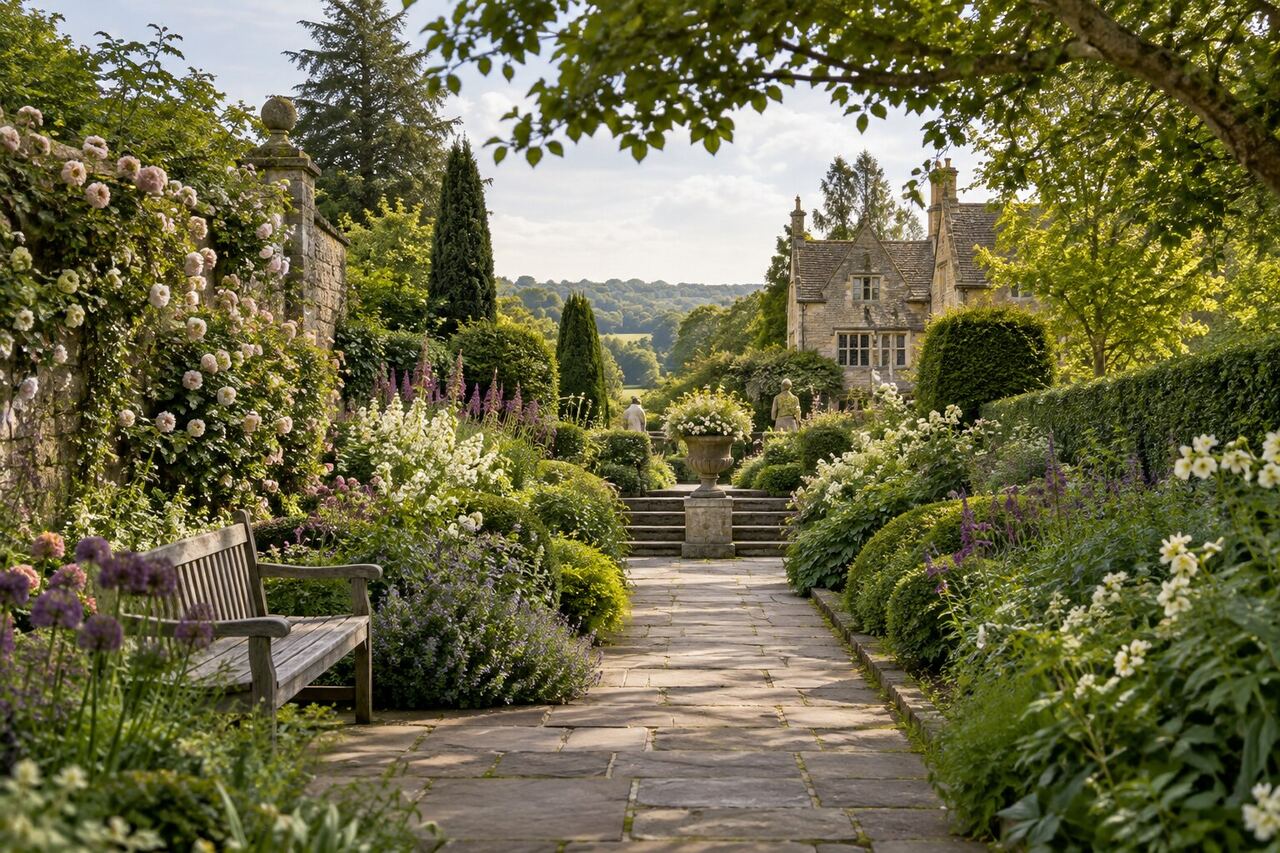
    Visiting a great garden is one of the most useful ways to learn about garden design. Photographs can show a beautiful border or a memorable view, but walking through a garden reveals something more important: sequence. You experience what is hidden and revealed, where a path slows you down, how planting changes around a corner and how architecture, landscape and plants work together.

    The most useful visits are therefore not only about collecting plant names. They are opportunities to understand why a garden feels the way it does.

    Look before you photograph

    When you first arrive in an important garden, resist the temptation to record every detail immediately. Look at the whole scene. What is your eye drawn towards? What establishes the character: a long lawn, a clipped hedge, mature trees, architecture or dense planting?

    That first impression often reveals the garden’s strongest organising principle.

    Notice what the path is doing

    Paths are not merely routes between attractions. Their width, direction, surface and relationship with planting control how a garden is experienced.

    A straight path may create anticipation by focusing on a distant object. A curved route may deliberately conceal what comes next. A narrow path through tall planting creates a very different mood from a broad walk beside open lawn.

    Study enclosure and release

    Many memorable British gardens alternate between enclosed and open spaces. A visitor might move from a sheltered garden room into a broad landscape, or from a dark woodland edge into a bright border.

    This contrast makes both spaces feel stronger. Even in a modest home garden, changing the degree of enclosure can make the layout more interesting.

    Look for repetition inside apparently complex planting

    Large borders can contain dozens of species, yet they rarely feel successful because of variety alone. Look closely and you will often find repetition: the same colour appearing at intervals, a particular grass moving through the planting, or one shape repeated at different heights.

    These recurring elements act as visual anchors. The lesson translates directly to smaller gardens, where repetition is often even more important.

    Pay attention to the quiet areas

    The famous view or spectacular border is only part of the design. Notice the spaces between them. A simple gravel path, a restrained hedge, a shaded transition or an area of mostly green planting may exist partly to prepare you for the next stronger moment.

    Not every metre of a garden has to perform at maximum intensity.

    Visit beyond peak season

    A garden seen in May teaches different lessons from the same garden in October. Early visits reveal fresh foliage and spring structure. High summer shows abundance. Autumn reveals grasses, seedheads and changing colour. Winter exposes the permanent framework.

    This is one reason repeated visits can be more useful than seeing many different gardens only once.

    Take home an idea, not an imitation

    A great garden may have hundreds of acres, mature trees and a full horticultural team. Copying it literally is rarely realistic. What can be borrowed are principles.

    • Frame a view rather than revealing everything.
    • Repeat plants and materials.
    • Use contrast between open and enclosed space.
    • Allow calm areas between more complex ones.
    • Choose one strong focal point instead of several weak ones.
    • Make paths part of the design rather than an afterthought.

    Those principles work in gardens of almost any scale. For examples closer to an ordinary home garden, see Making the most of a small garden, Choosing plants for a sunny border and Planting a garden for the seasons.

    A useful garden visit should leave you with fewer photographs than expected, but more ideas than you arrived with.

  • A Garden Designed for Wildlife

    A Garden Designed for Wildlife

    A garden designed for wildlife does not need to look abandoned, nor does a well-designed garden need to be ecologically sterile. Some of the same qualities that make a garden visually rich — layers, seasonal change, water, shelter and diverse planting — also create useful habitat.

    The most successful approach is to make wildlife part of the design from the beginning rather than treating it as a collection of accessories added afterwards.

    Think in habitat rather than products

    Insect hotels, feeders and nesting boxes can all have a place, but the foundation of a wildlife-friendly garden is habitat. What can live, feed, hide, drink or overwinter there?

    A hedge can provide shelter and nesting space. Flowering plants can feed pollinators. A small tree can offer height, shade, structure and food. Leaf litter and perennial stems can provide quieter places through winter.

    Plant for a sequence of flowers

    A long flowering season is usually more useful than one spectacular peak. Spring bulbs and flowering shrubs can start the year, followed by perennials, herbs and later-flowering plants through summer and autumn.

    Different flower forms support different insects, so variation is useful. The overall scheme can still be visually restrained through repetition and a controlled colour palette.

    Use layers

    A garden containing trees, shrubs, climbers, perennials and lower planting offers more habitat than a flat layer of lawn and paving. Those layers also create depth and make the garden visually more interesting.

    Where space is limited, climbers and trained shrubs are particularly useful because they create habitat vertically without requiring a large footprint.

    Add water if you can

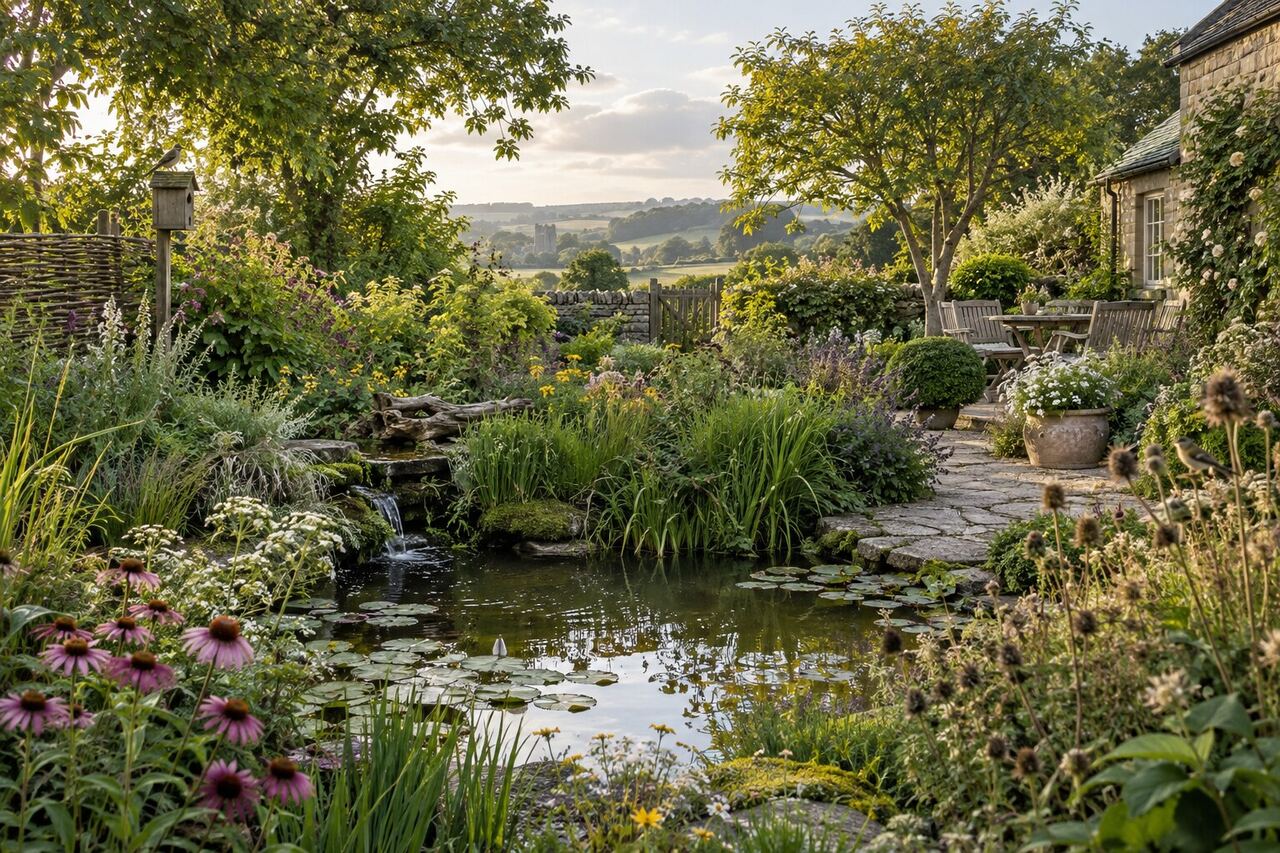
    Water can transform the ecological value of a garden. It does not require a large formal pond. A smaller wildlife pond or carefully designed water feature can support insects and birds while adding reflected light and movement to the garden.

    Make sure wildlife can enter and leave safely and avoid unnecessarily deep, steep-sided containers.

    Leave some material standing

    Autumn does not have to trigger complete clearance. Hollow stems, seedheads, grasses and dry perennial growth can remain valuable through winter.

    This material can also look beautiful in low light and frost, particularly when the planting has been designed with structure in mind.

    Keep the design readable

    Wildlife-friendly does not mean that paths disappear or vigorous plants are allowed to overwhelm everything. Clear edges and routes can coexist with relaxed planting. In fact, a strong structural framework often makes naturalistic or wildlife-focused areas look more intentional.

    Tidy selectively

    Remove diseased material, control invasive plants and keep access clear. Elsewhere, ask whether a task is actually necessary before doing it. Fallen leaves can sometimes remain beneath hedges and shrubs. Seedheads can stand. A quieter part of the garden can stay undisturbed for longer.

    See What to do with fallen leaves and Should you leave part of the lawn unmown? for practical examples.

    Make ecology and appearance reinforce each other

    The strongest wildlife gardens do not separate beauty from usefulness. A flowering hedge can define a boundary and offer shelter. A naturalistic border can provide food while creating movement and seasonal structure. A tree can frame a view and support birds and insects at the same time.

    When one element performs several roles, the garden becomes both more resilient and more convincing.

    Continue with Making more room for wildlife for further practical ideas.