
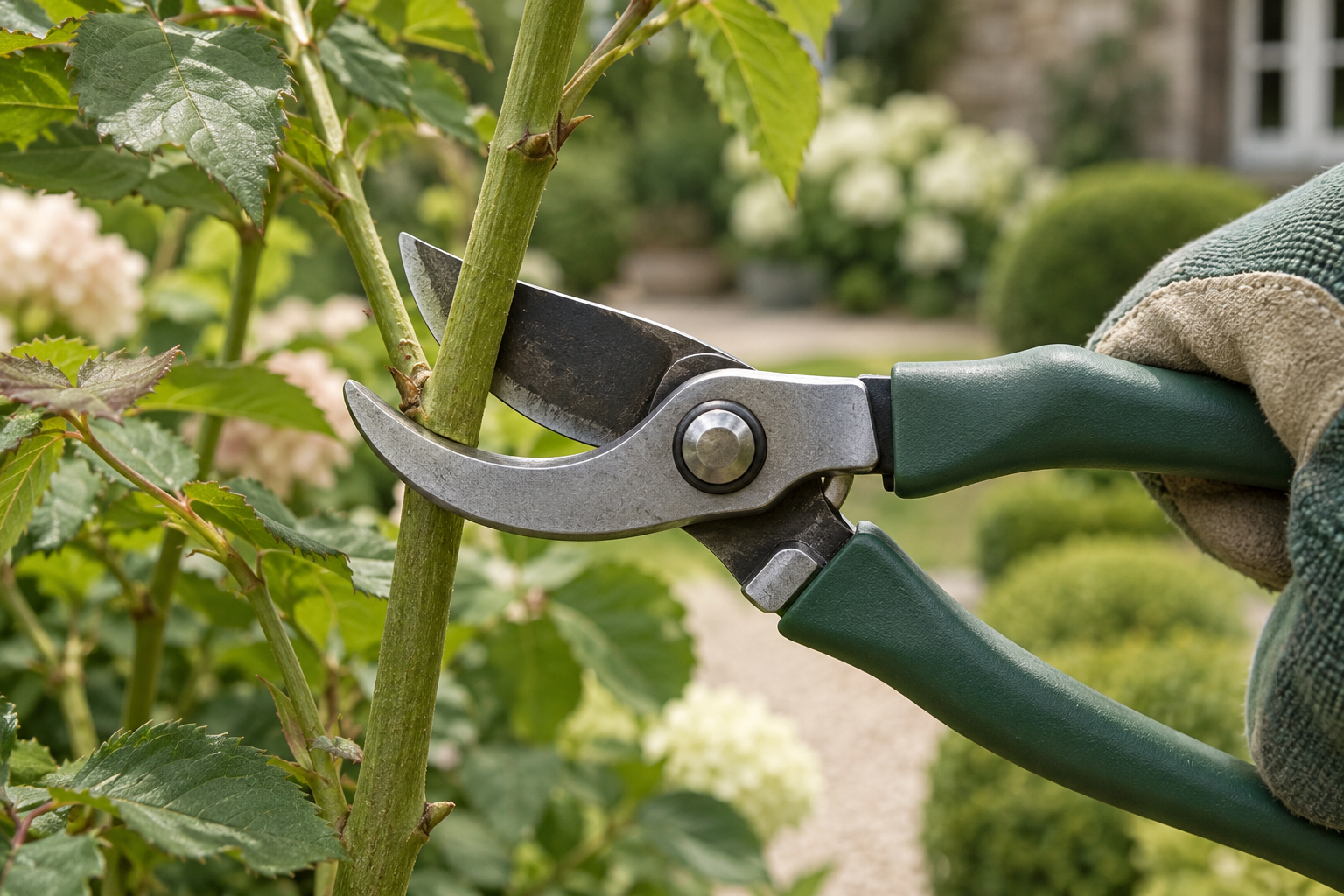
Secateurs are the tool behind thousands of small decisions in a garden. Deadheading, pruning roses, cutting back stems and removing damaged growth all depend on making a clean cut without crushing the plant or straining the hand.
The right pair should match your hand, the kind of pruning you do and the diameter of material you regularly cut.
Bypass or anvil?
Bypass secateurs have two blades that pass each other like scissors. They are generally the preferred choice for clean cuts on living stems.
Anvil secateurs use one cutting blade against a flat surface. They can provide useful leverage on dry or dead material but may crush softer living stems more easily.
Hand size matters
A pair that opens too widely can be tiring for smaller hands. A tool that is too small can reduce leverage and encourage you to force cuts it was not designed to make.
Where possible, hold the secateurs before buying. Open and close them repeatedly and check whether the handles sit comfortably without excessive stretching.
Do not buy on cutting diameter alone
Manufacturers often specify a maximum cutting capacity. Treat this as a limit rather than a target for every cut.
If a stem requires significant force, use loppers or a pruning saw. Repeatedly forcing thick branches through secateurs damages blades, pivots and hands.
How to position bypass secateurs
The sharp cutting blade should normally be placed on the side of the stem you want to keep. The thicker counter-blade sits on the waste side.
This keeps the cleanest part of the cut on the remaining plant.
Cut close, but not too close
When pruning above a bud, leave a small amount of stem rather than cutting into the bud itself. Avoid leaving long dead stubs that later die back.
The exact cut depends on the plant, but clean placement matters more than an exaggerated angle.
Make one decisive cut
Repeatedly chewing at a stem with half-closed blades creates ragged damage. Open the secateurs fully, position them correctly and make one controlled cut.
If the blades will not pass through comfortably, change tools.
Keep the pivot adjusted
Loose blades twist and tear rather than meeting correctly. Excessively tight secateurs are tiring and may not reopen smoothly.
Many quality secateurs allow the central pivot to be adjusted so the blades move freely without sideways play.
Clean sticky blades
Sap and resin build up during pruning and make the blades drag. Wipe the tool regularly during large jobs rather than waiting until the mechanism becomes difficult to move.
After working on diseased plant material, clean the blades appropriately before moving to healthy plants where disease transfer is a concern.
Sharpen the cutting blade, not both sides randomly
Bypass secateur blades are usually bevelled deliberately. Sharpening should maintain the original geometry rather than creating a new edge shape.
Light regular sharpening is easier than waiting until the blade is badly dull or damaged.
Use the wrist in a natural position
Awkward cuts made at full reach increase strain and reduce control. Reposition yourself so the stem is comfortably accessible where possible.
For repetitive pruning, change position regularly and avoid squeezing harder than necessary.
Good secateurs should be maintainable
Replaceable blades, springs and other wear parts can make a good pair of secateurs useful for decades. A tool that can be dismantled, cleaned and repaired is often a better long-term choice than one designed to be discarded when it becomes blunt.
For practical pruning, see How to prune roses. For maintenance, read Keeping garden tools in good condition.