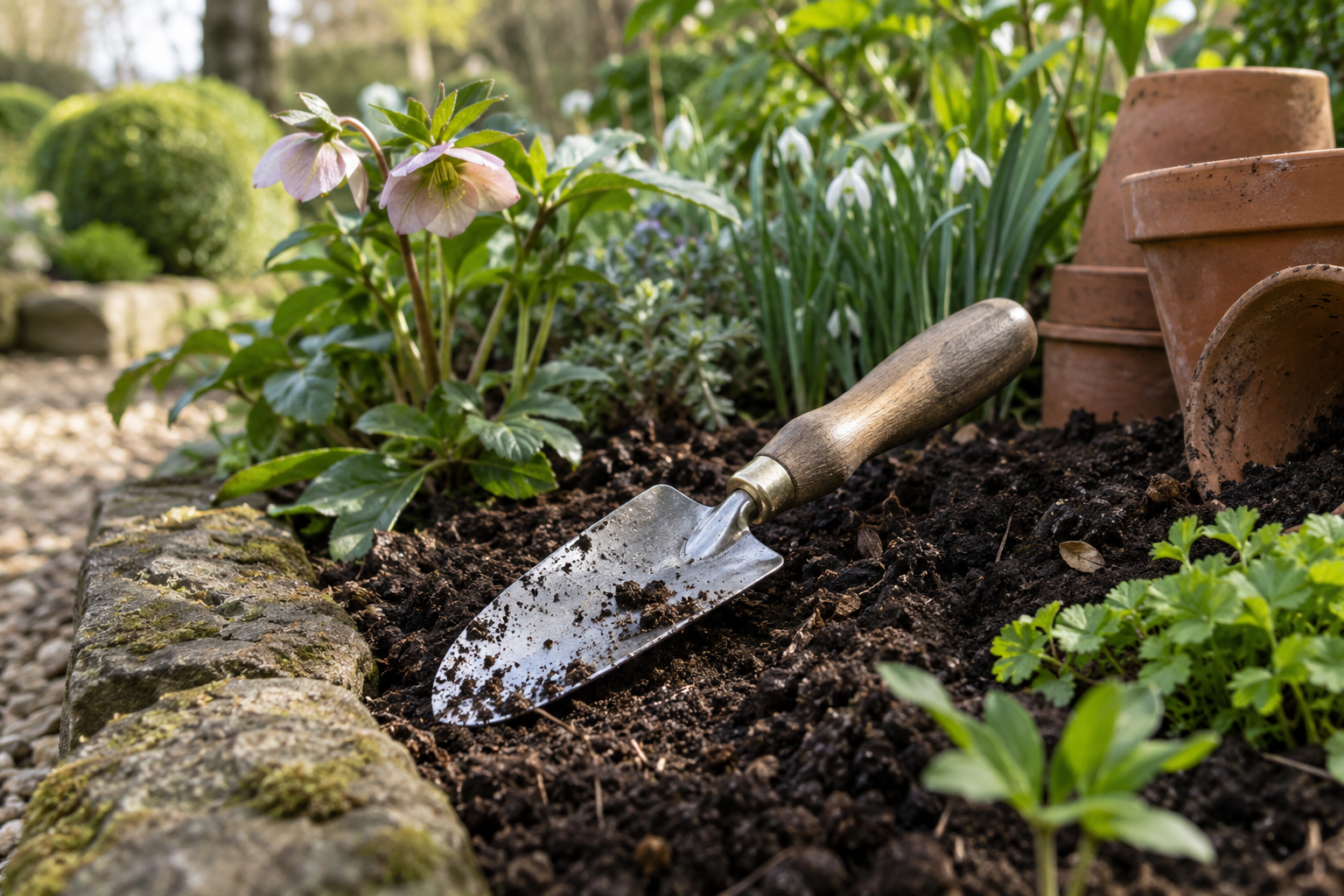
A garden trowel is one of the simplest tools in the shed, but it is also one of the most frequently used. Planting small perennials, bulbs and bedding plants, filling containers and working compost into a planting hole all put slightly different demands on the same small hand tool.
A good trowel does not need complicated features. It needs a useful blade shape, enough strength for the soil you garden in and a handle that remains comfortable when the work takes longer than expected.
Start with the work you actually do
A wide scoop-shaped trowel is useful for moving compost and making generous planting holes. A narrower blade is easier to place between established plants and can penetrate firmer soil with less resistance.
If most of your gardening happens in containers, weight and control may matter more than brute strength. If you regularly work in dense clay, rigidity and a strong connection between blade and handle become more important.
Blade shape
A traditional pointed blade is versatile because the tip can open soil while the wider section moves a useful amount of material. Very rounded blades scoop well but may be less effective in firm ground.
Extremely narrow blades are useful for precision planting and weeds, but they are not necessarily the best general-purpose trowel.
Blade material
Stainless steel resists corrosion well and is easy to clean. Carbon steel can be extremely strong and take a useful working edge but needs more attention after use because bare steel can rust.
Thickness alone does not determine strength. The shape of the blade, the quality of the steel and the way the shank is formed all contribute to how the tool behaves under pressure.
Look closely at the blade-to-handle connection
This is where cheap hand tools often fail. A thin spot, weak weld or short tang can loosen after repeated levering.
A trowel intended for demanding soil should have a substantial connection between the blade and handle. Ideally, the tool should feel like one continuous structure rather than two pieces simply attached to each other.
Handle length and grip
Very short handles offer control but can require more wrist effort. A slightly longer handle provides useful leverage. Too long, however, and a hand trowel begins to lose the precision that makes it useful.
Hold the tool before buying where possible. The handle should sit naturally in the hand without sharp edges or an oversized grip forcing the fingers apart.
Wood or synthetic handles?
Both can work well. A shaped hardwood handle feels warm and traditional and can last for many years when kept dry and maintained. Modern synthetic handles can be highly durable and need little maintenance.
The quality of the shape and construction matters more than the material alone.
Weight is a balance
A very light trowel can feel pleasant initially but may flex in difficult ground. An unnecessarily heavy one becomes tiring during repetitive planting.
A good general-purpose tool feels substantial enough to trust without making every planting job harder.
Depth markings are useful, but secondary
Some trowels include measurements on the blade for planting depth. These can be convenient for bulbs and young plants, but they should not be the main reason for choosing a tool.
A strong, comfortable trowel without markings is more useful than a weak one with a ruler printed on it.
Do not use a trowel as a crowbar
Even a strong hand tool has limits. Levering large stones, cutting thick woody roots or forcing the blade deep into compacted ground can damage the tool and your wrist.
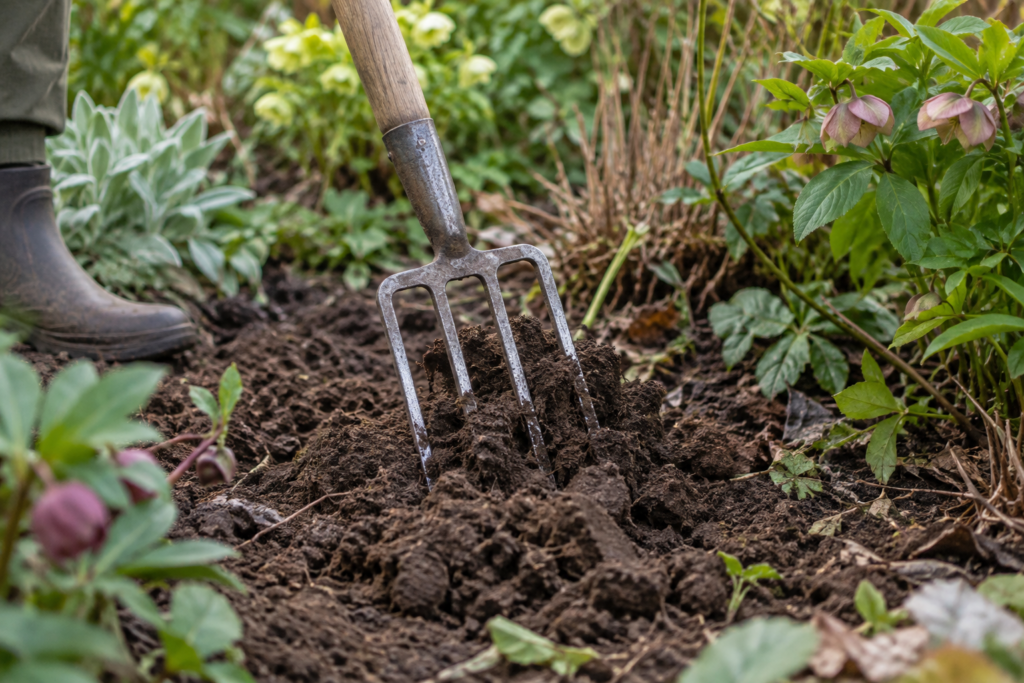
Use a fork, spade, root saw or other appropriate tool when the job becomes larger than the trowel.
A good trowel should become familiar
The best hand tools often disappear into the work. You stop thinking about the trowel and concentrate on the plant, the soil and the job in front of you. That is a better measure of quality than a long list of features.
For broader tool care, read Keeping garden tools in good condition. For seasonal tool use, see A few useful tools for summer gardening.