Yellow leaves are a symptom, not a diagnosis. Plants lose their green colour for many reasons, from completely normal ageing to root damage, drought, waterlogging, nutrient problems or disease.
The fastest way to make a wrong diagnosis is to see a yellow leaf and immediately add fertiliser. Instead, look at where the yellowing occurs, how quickly it developed and what changed around the plant recently.
First ask: which leaves are yellow?
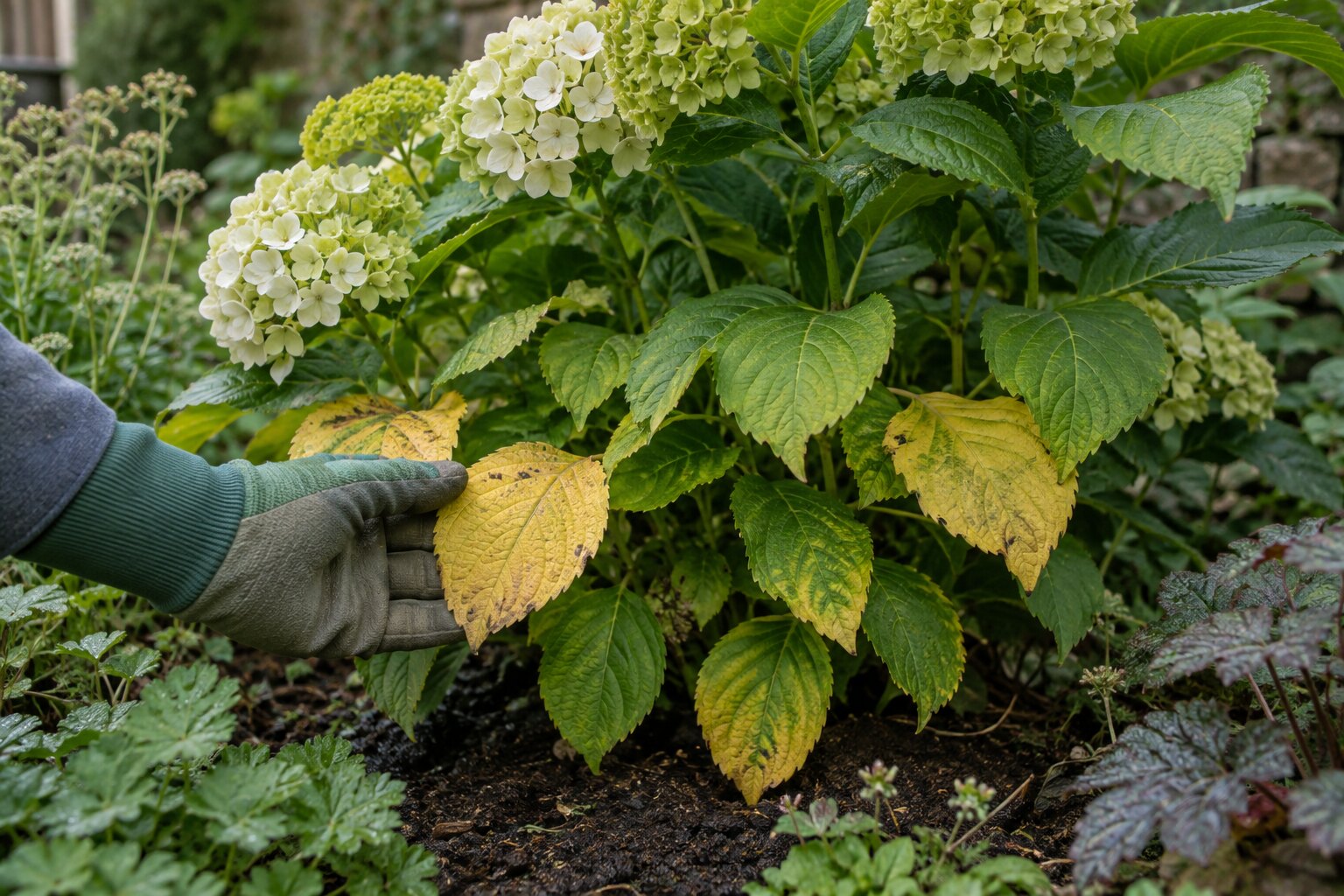
Older lower leaves yellowing slowly can be part of normal leaf ageing, particularly as a plant redirects resources into new growth or towards the end of its season.
Yellowing on the newest leaves, by contrast, may suggest a different problem involving nutrient availability, root conditions or active growth.
Look at the pattern
Uniform yellowing across the whole leaf suggests something different from green veins surrounded by pale tissue, scorched leaf edges or irregular yellow patches.
Take a moment to compare several leaves rather than focusing on one damaged example.
Check soil moisture before anything else
Both drought and waterlogging can cause leaves to yellow because roots are unable to supply the plant normally.
Push a finger into container compost or inspect the soil around garden plants. Do not judge moisture only by looking at the surface.
Yellow leaves and overwatering
Roots need oxygen as well as water. Constantly saturated compost can suffocate roots and encourage decay. The plant may wilt even though the compost is wet because damaged roots can no longer move water effectively.
In pots, check that drainage holes are open and that the container is not standing permanently in water.
Yellow leaves and drought
A plant repeatedly allowed to dry severely may shed older leaves to reduce water loss. Containers are especially vulnerable because a limited compost volume can dry rapidly in sun or wind.
Water deeply enough to moisten the root zone rather than giving frequent tiny amounts.
Could the plant be hungry?
Nutrient shortage is possible, particularly in containers where nutrients are gradually washed out or used by the plant. But deficiency should not be assumed before checking moisture and roots.
Feed according to the plant, season and growing medium. Too much fertiliser can damage roots and create a new problem.
Soil pH can affect nutrient availability
Some plants struggle to absorb particular nutrients when grown in soil with an unsuitable pH, even if those nutrients are technically present.
Acid-loving plants grown in strongly alkaline conditions are a common example. In a persistent unexplained case, a soil test can be more useful than guessing.
Check the roots
A root-bound container plant may have used most of the available compost and water very quickly. Lift the root ball where practical and see whether roots are circling densely around the pot.
Also look for dark, soft or foul-smelling roots that may indicate prolonged waterlogging or decay.
Pests and diseases
Some insects, mites and diseases cause yellowing or mottling. Inspect both sides of the leaves, stems and growing tips.
Do not attribute every yellow leaf to disease unless there are additional symptoms that support the diagnosis.
Has the weather changed?
Cold nights, heatwaves, strong wind and sudden changes in light can all produce temporary leaf damage. A recently planted specimen may also yellow while its root system is adjusting.
A simple diagnostic order
- Check whether the yellowing is normal seasonal ageing.
- Check soil or compost moisture.
- Inspect drainage and the roots.
- Consider recent heat, cold or transplant stress.
- Inspect for pests and disease symptoms.
- Only then assess feeding and nutrient availability.
Treat the cause, not the colour
Once a leaf has turned fully yellow, it will often not become green again. Success should therefore be judged by the new growth that follows after the underlying problem is corrected.
For moisture management, read Watering the garden in dry weather. For compost and growing media, see Peat-free compost in the garden.