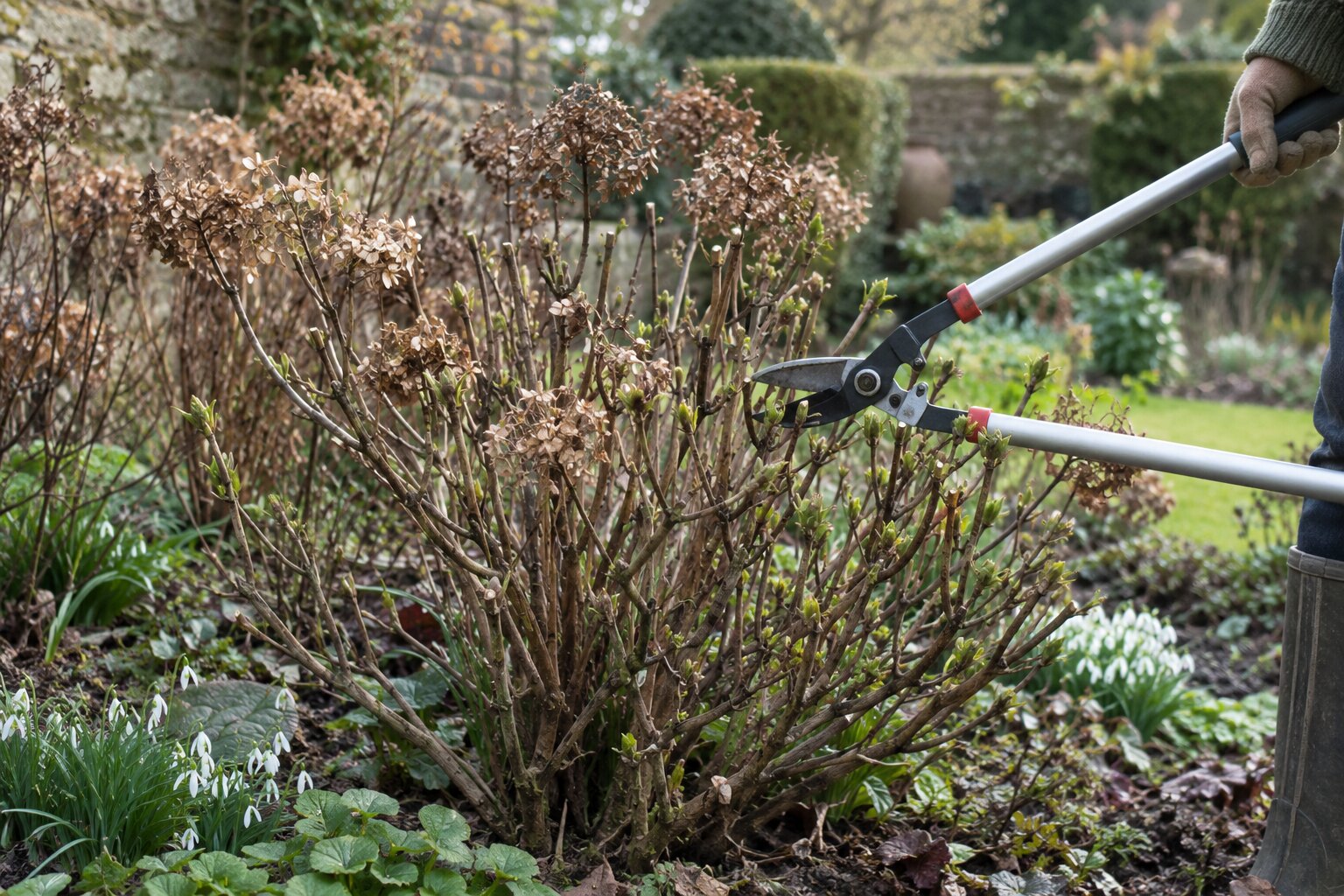
Many summer-flowering shrubs produce their flowers on new growth made during the current season. For these plants, pruning in late winter or early spring can encourage fresh vigorous shoots that later carry flowers.
The important word is many. Shrubs flower on different types of wood, and pruning at the wrong time can remove an entire season’s flowers. Before cutting hard, identify whether the plant flowers on new growth or on stems produced the previous year.
Why timing matters
A shrub that flowers on new season growth has time to replace pruned stems and form flower buds later in the same year. A spring-flowering shrub often formed its flower buds on older wood months earlier. Pruning that shrub in late winter can remove those buds before they ever open.
This difference is the foundation of good shrub pruning.
Start by identifying the plant
Examples of shrubs commonly pruned in late winter or early spring include certain buddlejas, hardy fuchsias, some hydrangeas and other plants that flower mainly on fresh growth. The correct treatment still depends on species and variety.
If identification is uncertain, delay severe pruning until you know how the plant flowers. A year of observation is often less damaging than a confident cut made at the wrong time.
1. Remove damaged and dead wood first
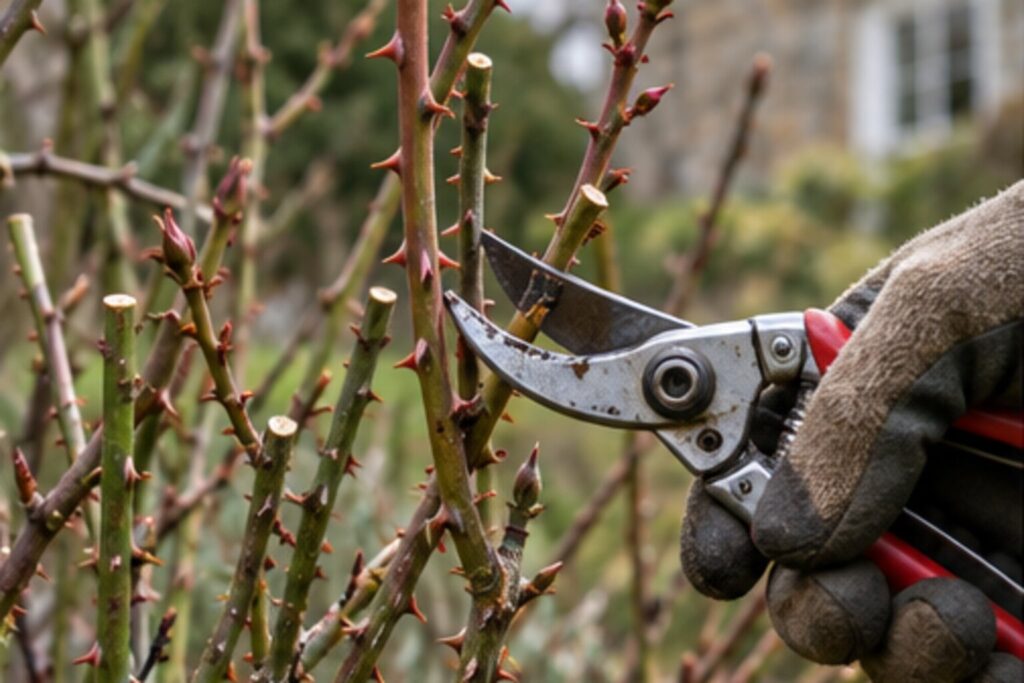
Winter may leave stems split, dead or badly damaged. Remove these before making decisions about shape. Cut back to healthy material using sharp, clean tools.
2. Remove badly placed growth
Branches that rub, cross heavily or grow into neighbouring paths and plants may need removal. Taking out a few entire stems often produces a more natural result than shortening every branch indiscriminately.
3. Decide how much new growth you want
Some vigorous summer-flowering shrubs respond well to hard pruning and produce strong new stems from a low framework. Others are better reduced more moderately.
Consider the mature size and position. A shrub repeatedly cut hard simply because it was planted in too small a space may never look convincing. Pruning cannot permanently solve a poor choice of plant.
4. Cut to healthy buds or framework
Where shortening stems, cut just above healthy buds. Where removing a branch completely, cut cleanly at its point of origin rather than leaving a long stub.
Large branches require the correct saw and technique to avoid tearing bark.
Renovating an old shrub
A mature shrub with a congested centre can often be improved by removing some older stems at the base. This allows younger growth to develop and gradually renews the plant.
For shrubs that do not respond well to drastic renovation, remove old wood over two or three seasons rather than stripping the plant in one operation.
Do not prune purely for neatness
A shrub is not a hedge. Cutting every shoot to the same outer surface can create dense twiggy growth and destroy the natural shape of the plant.
Selective cuts usually produce a better result. Look into the structure and remove or shorten individual branches with a reason.
Aftercare
After substantial pruning, check the soil around the root zone. A shrub asked to produce a large amount of new growth will establish that growth more successfully if the soil is not competing heavily with weeds or suffering prolonged drought.
Mulch can be useful after pruning, particularly on soil that dries rapidly, but do not pile organic matter directly against woody stems.
The simple rule
Before pruning any flowering shrub, answer one question: does it flower mainly on new growth or on older stems? Once that is clear, timing and severity become much easier to judge.
Continue with Getting ready for spring and Planting a garden for the seasons.