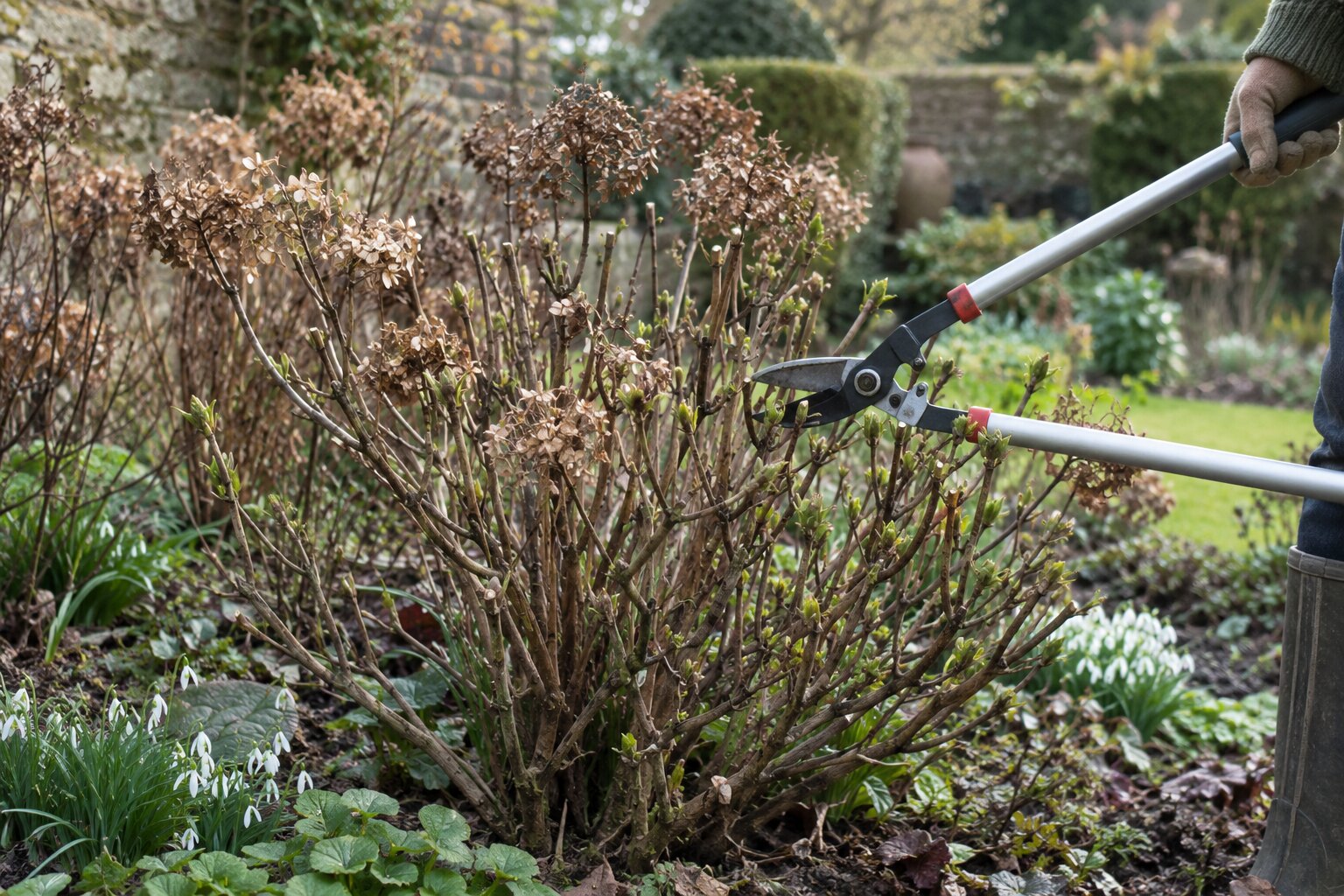
Pruning roses is less complicated than it first appears. The aim is not to cut every rose into the same shape, but to remove weak, damaged and badly placed growth while encouraging a strong framework that can carry healthy new shoots and flowers.
For many established bush roses, late winter into early spring is the main pruning period. The exact timing depends on climate and rose type, but the useful signal is usually the same: the harshest winter weather is passing and buds are beginning to swell.
First identify what kind of rose you have
Hybrid teas, floribundas and many modern shrub roses can generally be pruned during late winter or early spring. Climbing and rambling roses are different and may require another approach because they flower on different types of wood.
If you do not know the exact variety, look at how the plant grows. A compact bush that produces flowers on fresh shoots is usually treated differently from a large rose trained horizontally along a wall or arch.
Use clean, sharp tools
Good secateurs make pruning easier and leave cleaner cuts. Blunt blades crush stems rather than cutting them cleanly. For thicker stems, use loppers or a pruning saw instead of forcing ordinary secateurs beyond their comfortable capacity.
Wear gloves and long sleeves when working among thorny stems, particularly on large established plants.
1. Remove dead, damaged and diseased wood
Begin with the obvious material. Dead wood often looks dry or discoloured and has no healthy buds. Damaged stems may be split, rubbed or broken. Diseased material should also be removed where appropriate.
Cut back until the wood appears healthy. Removing this material first makes the remaining structure much easier to read.
2. Remove crossing and inward-growing stems
Stems rubbing against each other create wounds and congestion. Where two branches cross, keep the stronger or better-positioned one and remove the other.
Also look for growth heading directly into the centre of the plant. An open framework improves airflow and makes the final shape easier to maintain.
3. Remove weak growth
Very thin, weak stems often contribute little to the final display and can crowd stronger shoots. Removing them allows the plant to direct more energy into a smaller number of useful branches.
Do not remove every thin stem automatically. Use the overall structure of the rose as the guide.
4. Shorten the remaining framework
Once the plant is clean and open, shorten the remaining stems to encourage strong new growth. How hard you prune depends on rose type, age and vigour.
Strong modern bush roses often tolerate fairly substantial pruning. Older shrub roses and varieties grown mainly for a natural shape may need lighter treatment.
Where should the cut be made?
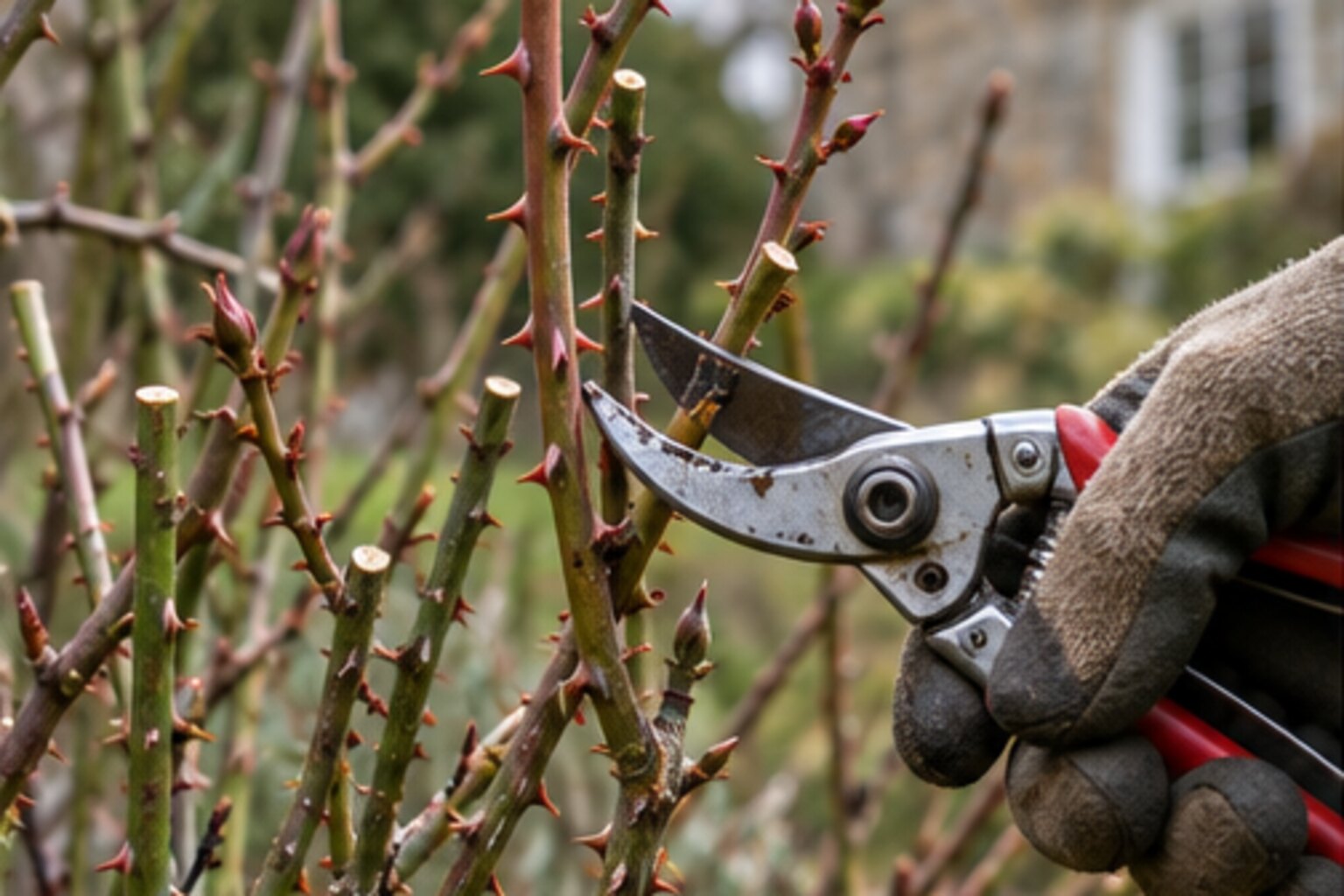
Make the cut slightly above a healthy bud. An outward-facing bud is often chosen because the new shoot then grows away from the centre of the plant.
A slight slope can help water run away from the bud, but the quality of the cut matters more than achieving a perfect angle. Avoid leaving a long dead stub above the bud, and avoid cutting so close that the bud itself is damaged.
What about old, thick stems?
Established roses sometimes benefit from gradual renewal. Removing one of the oldest stems close to the base can encourage fresh basal growth and prevent the framework becoming increasingly woody and congested.
Do not automatically remove all old wood in one year. Renewal is usually better done progressively.
After pruning
Clear away fallen rose leaves and prunings where disease may have been present. Mulching around the plant can help retain soil moisture and improve the surface of the soil, but keep mulch away from direct contact with the stems.
Where feeding is appropriate, apply it according to the needs of the rose and the product instructions rather than assuming more fertiliser will always produce a better plant.
Common pruning mistakes
- Using blunt secateurs that crush stems.
- Leaving dead or crossing growth because the plant already looks sparse.
- Pruning every rose type in exactly the same way.
- Leaving long stubs above buds.
- Cutting a weak plant extremely hard without considering why it is weak.
- Ignoring the final shape and concentrating only on individual cuts.
Pruning is about structure
A well-pruned rose should not look mechanically symmetrical. It should have a clear framework, space for new growth and enough healthy wood to support the season ahead. Once dead, weak and badly placed stems are removed, the remaining decisions become much simpler.
For related seasonal work, see Getting ready for spring and Keeping garden tools in good condition.