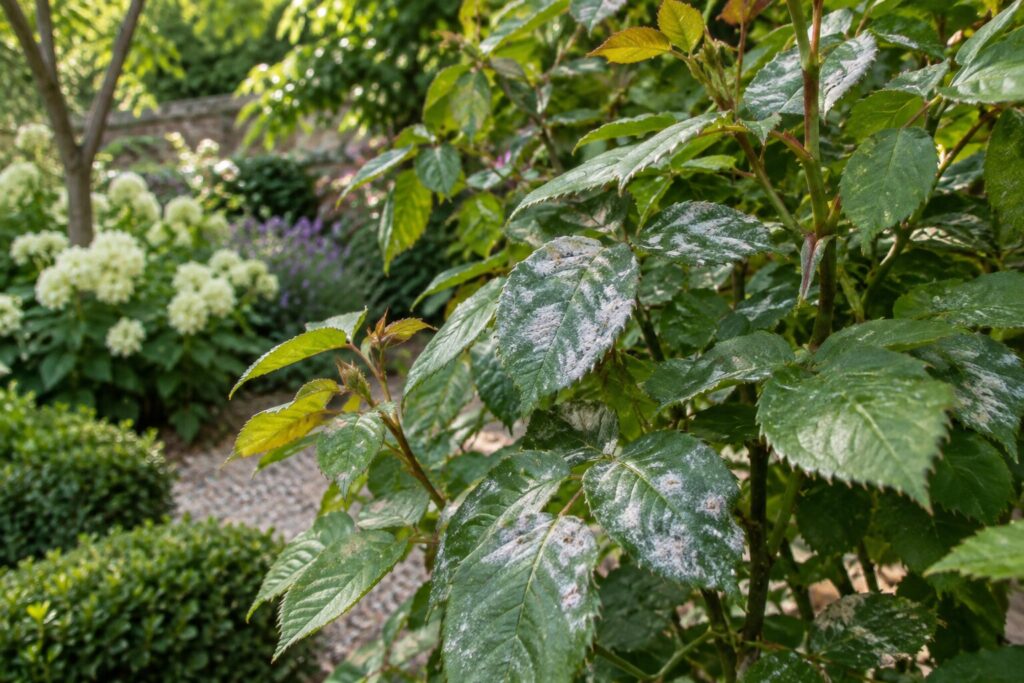
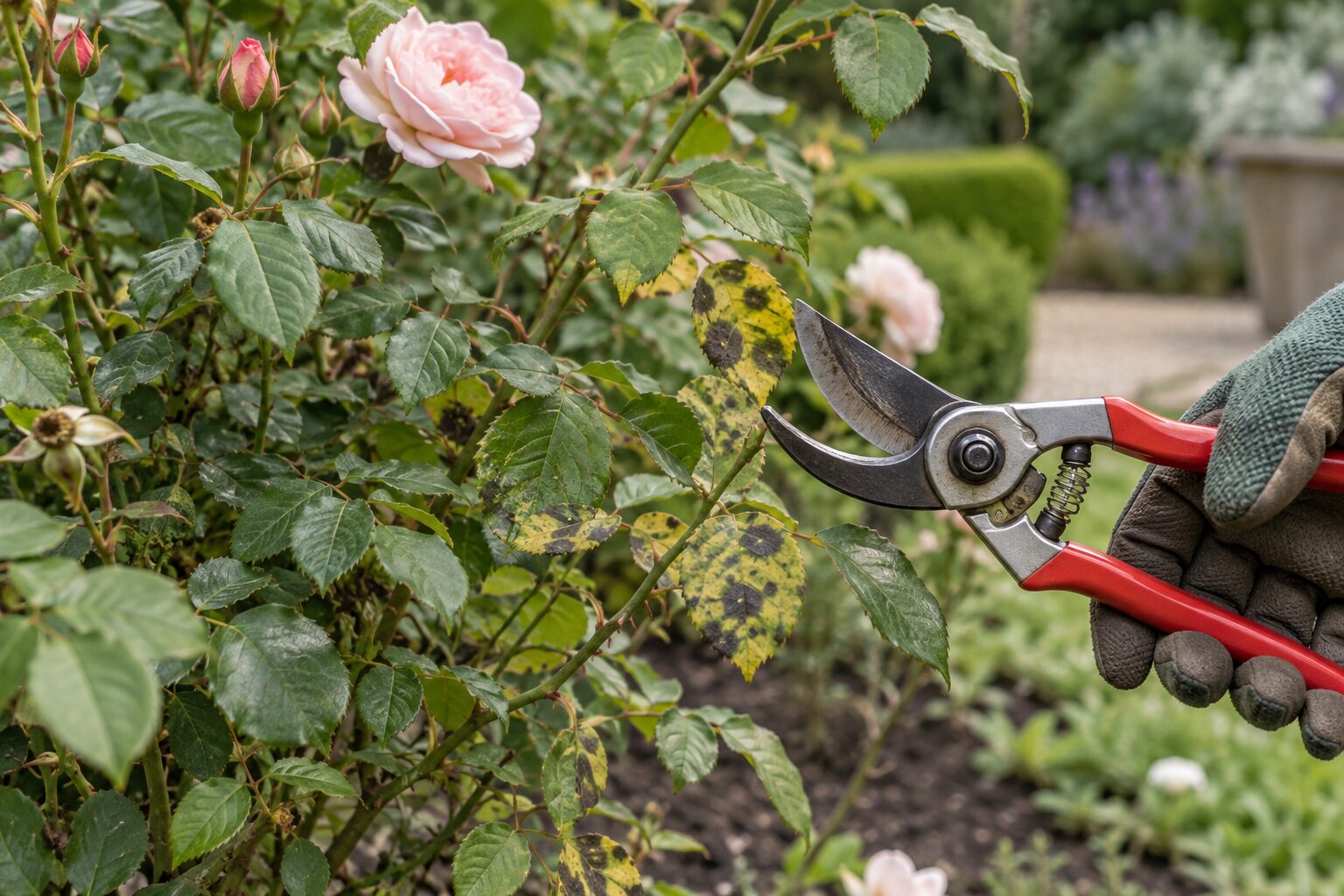
Black spot is one of the most common diseases of garden roses. Dark spots develop on leaves, often surrounded by yellowing tissue, and badly affected plants can lose a large proportion of their foliage during summer.
The aim of management is not necessarily to produce a rose with no marked leaf at all. It is to reduce repeated heavy infection so the plant keeps enough healthy foliage to grow and flower well.
Recognising black spot
Typical symptoms are irregular dark purple-black spots on leaves. The surrounding leaf tissue often turns yellow, and leaves may fall prematurely.
Symptoms often begin on lower foliage and become more obvious as the season progresses.
Why some roses suffer more than others
Rose varieties differ greatly in their resistance. Some remain relatively clean in ordinary garden conditions while others become heavily affected every year.
Growing conditions matter too. Dense planting, a sheltered humid position and stressed plants can all make disease management more difficult.
1. Remove badly affected leaves
Where practical, remove heavily infected leaves from the plant. Do not remove so much foliage that an already weak rose is left almost bare purely for cosmetic reasons.
2. Clear fallen rose leaves
Infected fallen leaves can contribute to disease carrying over around the plant. Collecting heavily affected rose foliage from beneath the plant is a sensible part of seasonal hygiene.
This is particularly useful in autumn when a large amount of leaf material accumulates under established roses.
3. Improve the structure of the rose
Congested plants remain damp for longer and are harder to inspect. Appropriate pruning can open the framework and improve airflow through the plant.
Pruning technique depends on rose type, so do not simply remove random stems during the growing season.
4. Water at soil level
During dry periods, water the root zone deeply rather than repeatedly wetting the foliage. Splashing water can help move fungal spores between leaves, and wet foliage can remain damp for longer in poorly ventilated positions.
Good soil moisture also helps the rose maintain stronger growth and replace lost foliage.
5. Mulch around the rose
A suitable organic mulch can help moderate soil moisture and reduce the amount of soil splash reaching lower leaves.
Keep mulch away from direct contact with stems and the crown.
Avoid overfeeding
A rose repeatedly pushed into very soft growth is not necessarily a healthier rose. Feed according to the needs of the plant and avoid assuming that strong fertiliser applications will compensate for disease.
Choose resistant roses for new planting
Variety selection is one of the most effective long-term tools. If you are planting new roses, consider disease resistance alongside flower colour, fragrance and mature size.
A rose that remains healthy with modest care is usually more rewarding than one that needs repeated treatment to retain its leaves.
Do fungicides solve black spot?
Fungicides may be available for black spot in some regions, but they are not a substitute for good plant choice and growing conditions. Products and legal approvals change over time.
If a fungicide is used, choose only one currently authorised for roses and black spot in your location and follow the label exactly.
Should a badly affected rose be replaced?
If the same rose loses most of its leaves every year despite appropriate care, replacement can be reasonable. Modern disease-resistant varieties can provide a similar garden effect with much less intervention.
Manage the whole plant
Black spot management works best when several small measures are combined: good variety choice, sensible pruning, reliable soil moisture, hygiene and appropriate spacing. No single action is likely to keep a highly susceptible rose completely clear in a bad disease year.
For watering advice, see Watering the garden in dry weather. For plant selection, read Choosing plants for a sunny border.