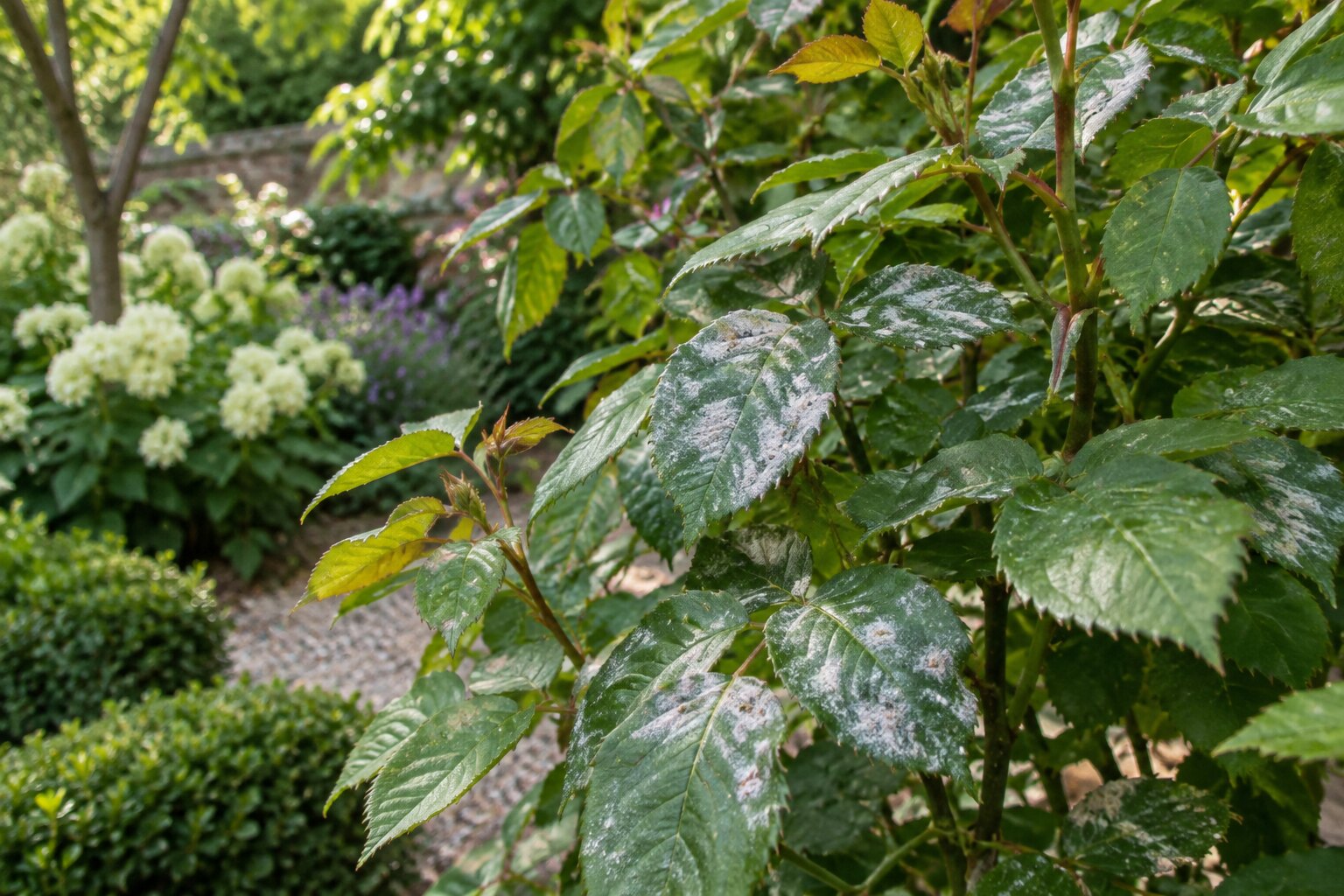
Powdery mildew is a group of fungal diseases that produce a pale, powder-like coating on leaves and stems. It is common on many ornamental plants, vegetables and fruit crops, particularly later in the growing season.
It rarely appears for one simple reason. Plant stress, crowded growth, dry roots, poor airflow and susceptible varieties can all contribute to the conditions in which mildew becomes noticeable.
What does powdery mildew look like?
The most obvious symptom is a white or grey powdery coating, often beginning as isolated patches on leaf surfaces. These patches can expand until a large part of the leaf appears covered.
Heavily affected leaves may become distorted, discoloured or die prematurely.
Powdery mildew is not one single fungus
Different powdery mildew fungi affect different groups of plants. A mildew on one species does not automatically mean every plant nearby will develop the same disease.
This is useful because management should focus on the affected plant and its growing conditions rather than treating the entire garden indiscriminately.
Why dry roots can make mildew worse
Powdery mildew often becomes conspicuous during warm, relatively dry periods. Plants suffering repeated drought stress can become more susceptible.
Water deeply when needed so the root zone is adequately moist. Frequent superficial sprinkling encourages shallow roots and does little to help a plant through prolonged dry weather.
Improve airflow
Dense crowded growth creates a sheltered microclimate around leaves. Thin badly congested stems where appropriate and give plants enough space to develop.
Do not prune indiscriminately simply to create airflow. The correct pruning method still depends on the plant.
Water the soil rather than repeatedly wetting foliage
Powdery mildew does not require continuously wet leaves in the same way some other fungal diseases do. Watering the root zone is still generally the most efficient way to support the plant and avoid wasting water.
Remove badly affected material
Where only a limited amount of growth is heavily affected, remove those leaves or shoots if the plant can tolerate it. Do not strip a plant of most of its foliage in an attempt to remove every visible patch.
Clear heavily infected fallen leaves where appropriate rather than leaving large amounts of diseased material immediately below the plant.
Avoid excessive nitrogen
Very lush, soft growth can be more vulnerable to disease. Feed plants according to need rather than pushing them with repeated high-nitrogen applications.
Choose resistant varieties where mildew is persistent
Where the same plant suffers badly every year despite reasonable growing conditions, replacing it with a more resistant variety may be more effective than treating the disease repeatedly.
This is especially useful in edible crops or ornamental groups where breeders have developed varieties with better resistance.
Should you use a fungicide?
Good growing conditions, appropriate watering and resistant varieties are the first line of management. Where a fungicide is considered necessary, use only a currently authorised product for the plant and disease in your location and follow the label exactly.
Do not assume that repeated preventative spraying is automatically the best solution.
What happens at the end of the season?
Annual or deciduous foliage will eventually be removed naturally or during seasonal garden care. Clearing heavily diseased material can reduce the amount of infected debris around the plant, although spores may also arrive from elsewhere in future seasons.
Think about the plant before the disease
A little mildew late in the season on an otherwise healthy established plant may be largely cosmetic. A severe recurring infection on a stressed plant is more useful as a sign that the growing conditions, variety or maintenance need attention.
For drought management, read Watering the garden in dry weather. For seasonal clean-up, see Preparing the garden for winter.