Vine weevil is particularly troublesome in pots and containers because its larvae feed on plant roots below the compost surface. A plant can look reasonably healthy one week and then suddenly wilt or collapse even though the compost is moist.
The adult beetles damage leaves, but the root-feeding larvae are usually the more serious problem. Understanding both stages makes control much more effective.
Recognising adult vine weevils
Adult vine weevils are dark, flightless beetles that feed mainly at night. A common sign is irregular notching around the edges of leaves.
Leaf notching is unattractive but often not fatal. The greater concern is that adults can lay eggs in compost and soil, leading to the larval stage below ground.
Recognising the larvae
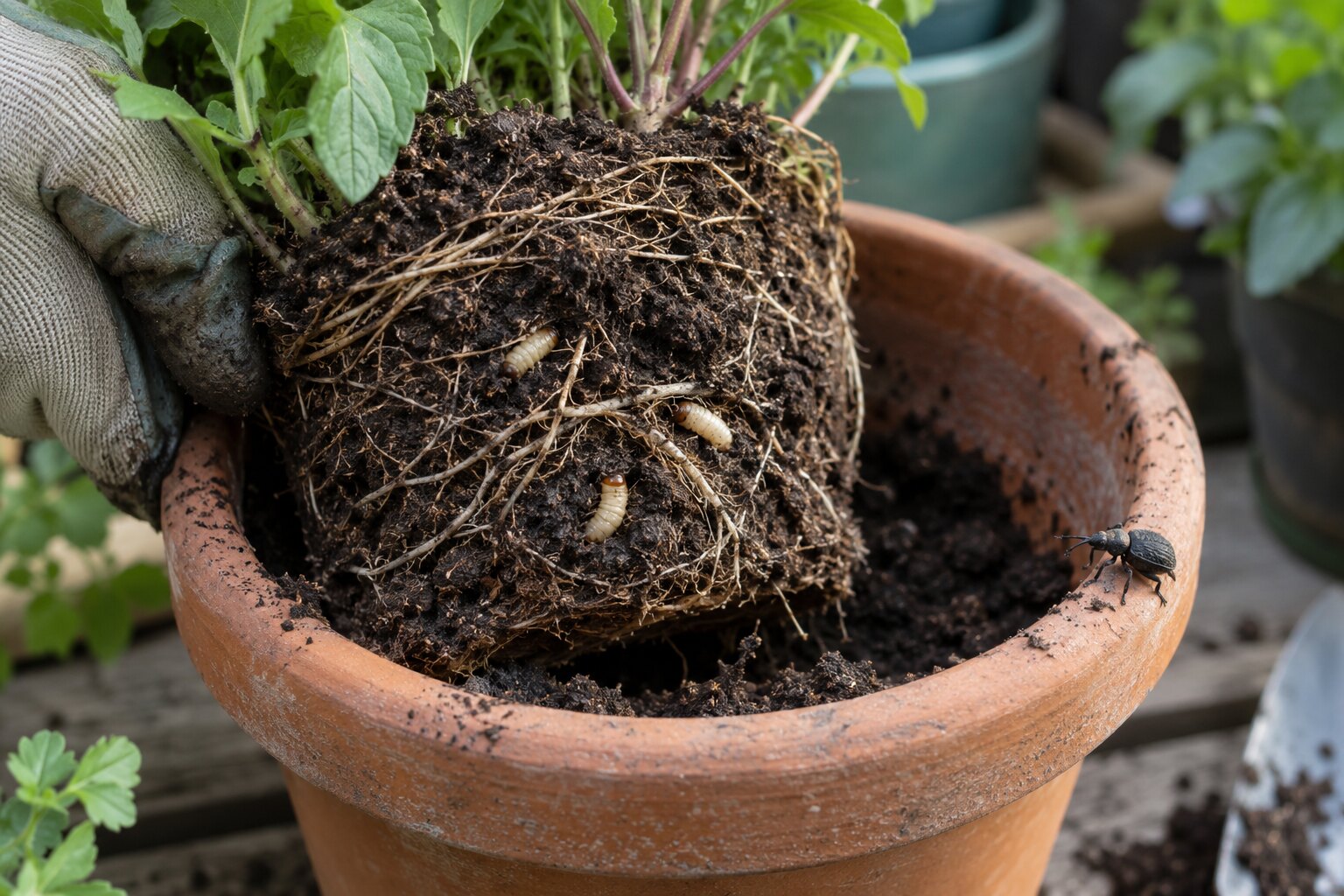
Vine weevil larvae are pale, legless grubs with a brown head. They live in compost or soil and feed on roots and sometimes the lower crown of the plant.
A severely affected container plant may become loose in its pot because so much of the root system has disappeared.
Why pots are particularly vulnerable
In a container, roots are concentrated in a small volume of compost. Larvae therefore have access to a large proportion of the root system and can cause serious damage quickly.
Container-grown heucheras, primulas, fuchsias, cyclamen and many other ornamental plants can be affected, although vine weevil is not limited to these plants.
1. Inspect suspicious plants
If a plant suddenly wilts despite moist compost, gently check whether it is still firmly rooted. Where practical, remove the root ball from the pot and inspect the outer compost and root zone.
Look for larvae and for roots that appear to have been eaten away.
2. Remove larvae when you find them
Physical removal is useful in containers because the root zone is accessible. Remove visible larvae and badly contaminated compost.
Where the plant still has a viable root system, repot it into fresh suitable compost and monitor it closely while it recovers.
3. Look for adult beetles at night
Adults hide during the day beneath pots, boards, dense foliage and other sheltered places. Checking plants after dark with a torch can reveal beetles that were invisible during daylight.
Hand collection can make a useful difference where only a small number of containers are involved.
Biological control
Beneficial nematodes are widely used against vine weevil larvae. They are living organisms and work only within suitable temperature and moisture ranges.
Follow the supplier’s current instructions carefully. Applying nematodes to compost that is too cold, too dry or allowed to dry immediately afterwards can reduce effectiveness substantially.
Do not assume every notched leaf means an emergency
Adult feeding alone may be largely cosmetic. Use leaf damage as a warning to inspect containers rather than treating the leaves as the main problem.
Check new plants
Vine weevil can arrive with newly purchased container plants. Inspect root balls when repotting and pay attention to plants that look unexpectedly weak.
Keep the growing area tidy but not sterile
Stacks of unused pots and dense debris immediately around vulnerable containers can create hiding places for adult beetles. Basic housekeeping makes monitoring easier.
There is no need to strip the wider garden of habitat. Concentrate on the places directly associated with susceptible pots.
Can an affected plant recover?
Yes, if enough healthy root and crown remain. Remove the larvae, repot where appropriate and reduce stress while the plant rebuilds its root system.
Severely damaged plants with virtually no roots may not recover, especially if the crown itself has been eaten.
The key is finding the problem below the surface
Vine weevil is easy to misunderstand because the most damaging stage is hidden. When a container plant collapses unexpectedly, checking the roots is often more useful than looking for another problem on the leaves.
For healthier container growing, see Peat-free compost in the garden.