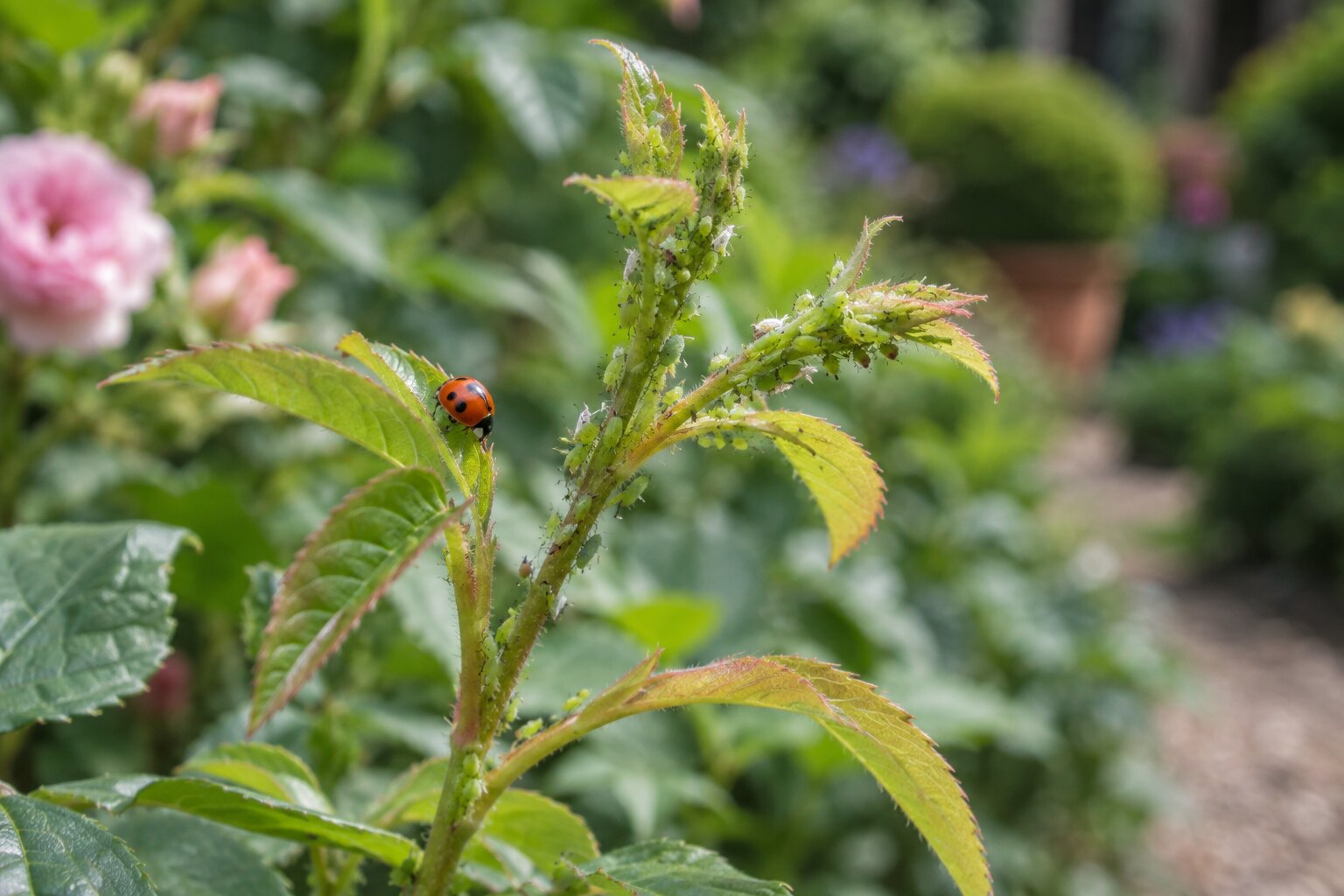
Aphids are among the most familiar garden pests. They gather on soft new shoots, young leaves and flower buds, where they feed on plant sap. A few aphids are rarely a reason to panic, but large colonies can distort new growth, weaken young plants and produce sticky honeydew on leaves below.
The most useful approach is to look at the whole plant before reaching for a treatment. In many gardens, predators such as ladybirds, hoverfly larvae, lacewings and birds reduce aphid populations naturally once spring is fully underway.
How to recognise aphids
Aphids are small, soft-bodied insects. Depending on species they may be green, black, grey, pink or other colours. Colonies are often concentrated on the youngest parts of a plant because this growth is tender and nutrient-rich.
Look closely at curled leaves, distorted shoot tips and flower buds that are not developing normally. Ants moving repeatedly up and down a plant can also be a clue because they are attracted to the sugary honeydew aphids produce.
Do aphids always need controlling?
No. On a strong established plant, a modest aphid population may cause little lasting harm. Aphids are also an important food source for many beneficial insects and birds.
Intervention is more useful where a colony is rapidly deforming new growth, overwhelming a young plant or heavily affecting a crop or ornamental feature you particularly value.
1. Remove small colonies by hand
On a small plant, the fastest control may simply be to rub or wipe aphids from affected shoots. This works particularly well when you spot a colony early.
Check the undersides of leaves and the tightest growing tips, where insects can be hidden from casual view.
2. Use water on sturdy plants
A firm but controlled jet of water can dislodge aphids from robust stems and leaves. Once knocked from the plant, many do not find their way back.
This method is unsuitable for delicate flowers, very young seedlings or brittle growth that can be damaged by the force of the water.
3. Encourage natural predators
Aphid populations often rise before predator numbers catch up. If a plant can tolerate some damage, giving the garden ecosystem time to respond can be effective.
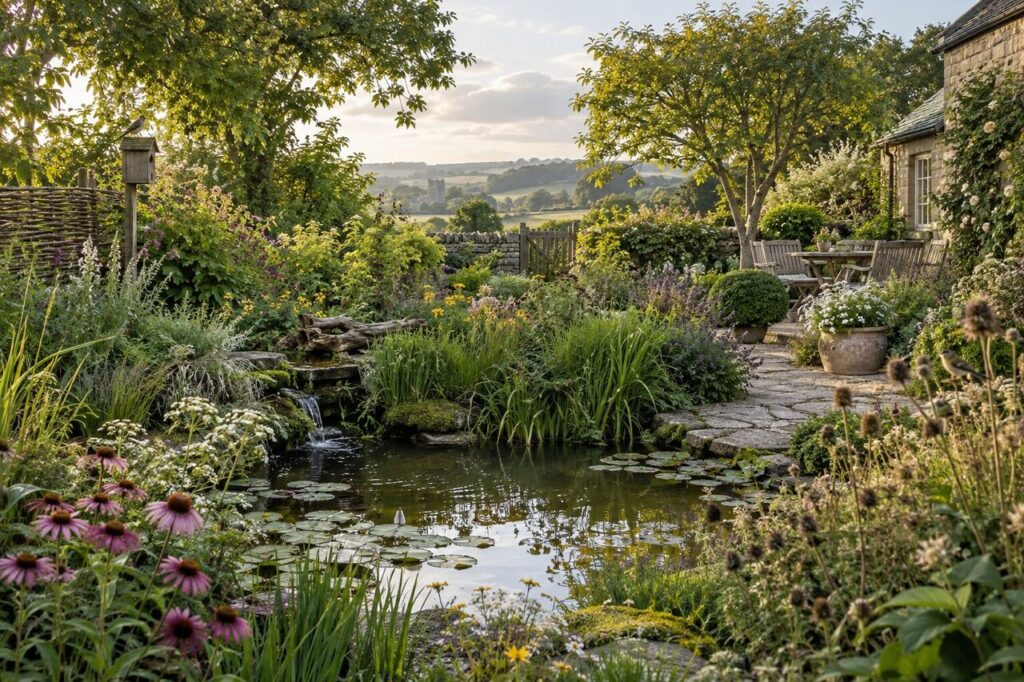
Grow a diverse range of flowering plants, avoid unnecessary broad-spectrum pesticide use and leave some shelter for beneficial insects. A garden that supports predators is less dependent on repeated intervention.
Watch the ants
Ants sometimes protect aphid colonies because they feed on honeydew. Their presence does not create the aphid problem, but heavy ant activity can make it harder for natural predators to reach a colony.
If ants are farming aphids on a particular plant, focus first on the aphids rather than treating the whole garden for ants.
Why weak plants may suffer more
Very soft, lush growth can be particularly attractive to aphids. Excessive feeding, especially with high-nitrogen fertilisers, may produce large amounts of tender new growth that insects can exploit.
Keep plants growing steadily rather than pushing them into unnaturally rapid growth.
Should you remove badly affected shoots?
Where only one or two tips are heavily infested and the plant can tolerate pruning, removing those shoots can eliminate a large proportion of the colony immediately.
Do not cut away large amounts of valuable growth simply because a few insects are present.
What about sprays?
Any spray can affect more than the target pest, particularly when flowers are open and beneficial insects are active. Start with physical removal and natural control where practical.
If a plant-protection product is genuinely required, use only a product legally approved for the plant and pest in your location, follow the current label exactly and avoid unnecessary treatment of flowers or non-target insects.
Check the plant again after a few days
Aphids reproduce quickly, so one intervention is not always enough. Recheck affected growing tips and repeat gentle control if necessary.
Aphids are usually a management problem, not a disaster
Healthy established plants can often tolerate more aphid activity than gardeners expect. The goal is rarely to eliminate every aphid from the garden. It is to prevent serious damage while keeping the ecological relationships that help control pests naturally.
For another common pest, read Slugs in the garden. For supporting a more balanced garden ecosystem, see Making more room for wildlife.