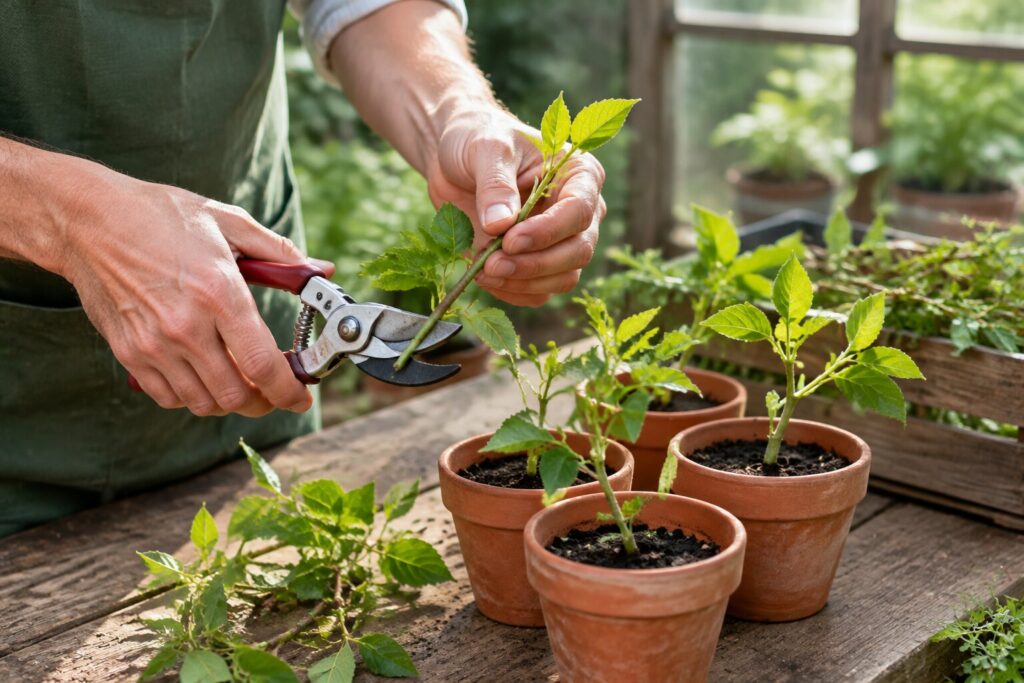
Dividing established perennials is one of the most useful ways to renew a border without starting again. A mature clump can often be lifted and separated into several vigorous pieces, giving you new plants while improving the performance of the original one.
Division is particularly valuable when a perennial has become congested, developed a bare centre, produced fewer flowers or simply grown beyond the space intended for it.
When should perennials be divided?
For many garden perennials, the best periods are spring as active growth begins or early autumn while soil is still warm enough for roots to establish. Avoid dividing during severe heat, frozen conditions or when soil is saturated.
A useful principle is to give the divided plant time to make roots before it has to cope with either summer drought or winter extremes.
Not every perennial wants the same treatment
Many clump-forming perennials divide readily, but plants with deep taproots, woody crowns or very specific root structures may respond poorly. If you are unsure, check the propagation method recommended for the particular plant before lifting a valuable specimen.
Prepare the new planting area first
Do not leave freshly divided plants lying in the sun while you decide where they should go. Prepare the destination before lifting the parent clump. Remove perennial weeds, loosen compacted soil and make sure the area drains reasonably well.
Where the soil needs improvement, incorporate suitable organic matter into the wider planting area rather than creating a small pocket of completely different material around the roots.
1. Cut back excessive top growth if necessary
Large leafy plants are easier to handle when some top growth is removed, particularly in autumn. Do not cut everything automatically: the amount depends on the plant and the season. The goal is simply to reduce damage and moisture loss while you work.
2. Lift a generous root ball
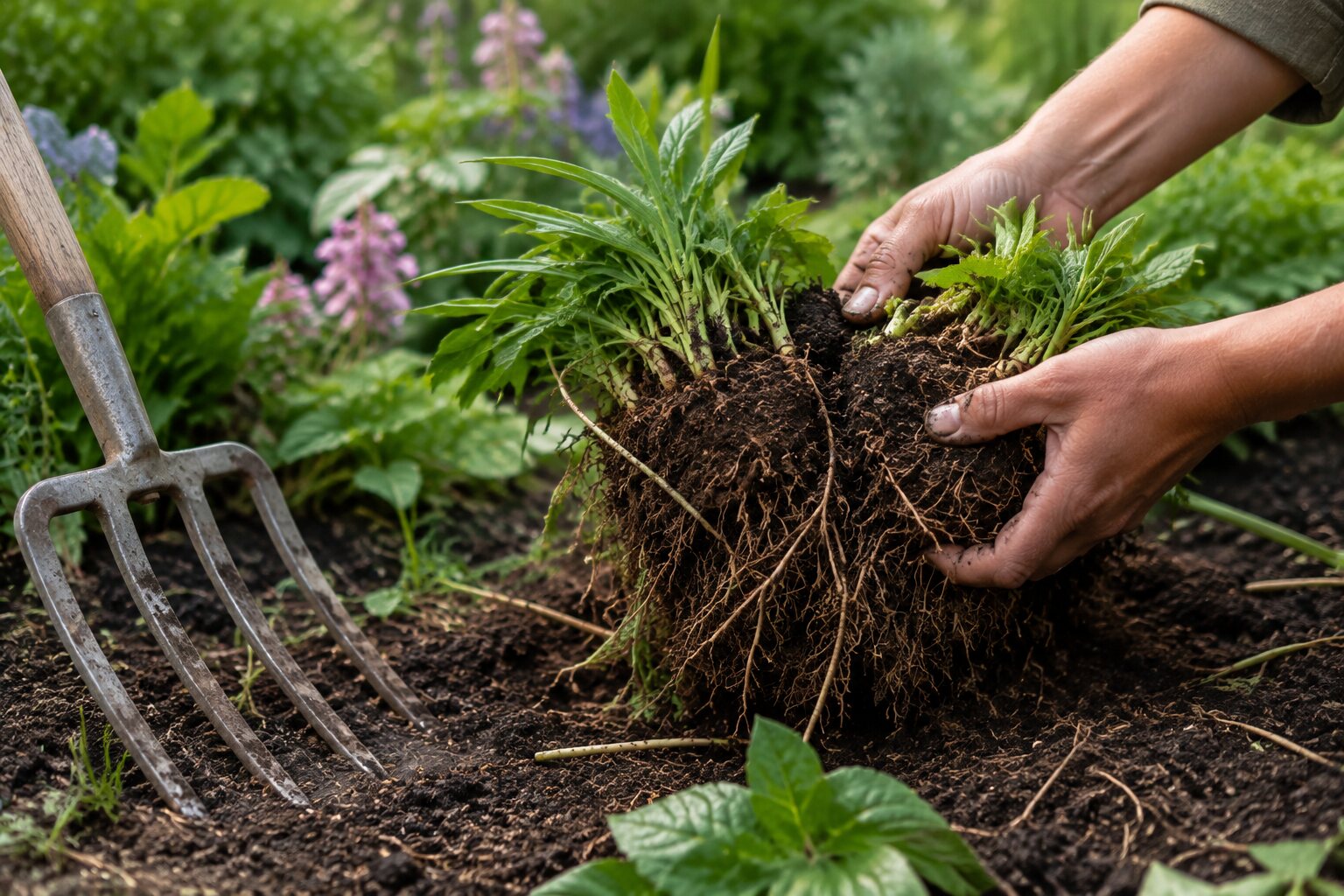
Work around the clump with a fork or spade, beginning far enough from the crown to avoid cutting through the most useful roots. Loosen the plant from several sides before levering it from the ground.
For valuable or brittle plants, two garden forks inserted back-to-back can sometimes separate a clump more gently than chopping through it immediately with a spade.
3. Separate the healthiest sections
Once lifted, examine the crown. Look for vigorous outer portions with healthy shoots and roots. Old, exhausted or dead material from the centre can usually be discarded.
Loose-rooted plants may pull apart by hand. Dense crowns may need two forks, a sharp spade or a clean knife. Each new piece needs enough viable root and growing points to re-establish.
Do not make divisions unnecessarily small
It is tempting to turn one plant into as many pieces as possible. Very small divisions, however, take longer to recover and may be more vulnerable to drought or competition. Fewer substantial pieces usually establish faster and make a stronger visual impact in the border.
4. Replant promptly
Plant divisions at approximately the depth at which they were growing before. Spread roots naturally rather than forcing them into a narrow hole. Firm the soil gently so there are no large air pockets, then water thoroughly.
If you are replanting part of the original clump in the same position, refresh the surrounding soil and remove exhausted or damaged material before returning the healthy division.
5. Water during establishment
Even drought-tolerant mature plants need reliable moisture while rebuilding a root system. Keep an eye on newly divided perennials through dry periods. The aim is consistently adequate moisture, not permanently saturated soil.
Mulch, but leave the crown clear
A layer of organic mulch around newly planted divisions can help moderate soil moisture and reduce weed competition. Avoid burying crowns that naturally sit at or near the soil surface.
Signs that a perennial may need dividing
- The centre of the clump is dying out while the edges remain vigorous.
- Flowering has become noticeably weaker.
- The plant has outgrown its allotted space.
- Neighbouring plants are being crowded.
- You want to repeat a successful plant elsewhere in the garden.
Division is also a design tool
Repeating a reliable perennial in several places can make a border feel more coherent. Division therefore does more than propagate plants: it lets you edit the planting, strengthen rhythm and redistribute plants towards the conditions where they perform best.
Before replanting, it is worth revisiting Choosing plants for a sunny border and Planting a garden for the seasons.