Some of the easiest flowers in a garden are also among the best candidates for autumn sowing. Hardy annuals complete their life cycle in a single year but can tolerate cooler conditions than tender annuals. Sown at the right time, they begin developing before winter, pause when conditions become difficult and resume growth early in spring.
The reward can be earlier flowers, stronger plants and less pressure during the busiest weeks of spring. Autumn sowing is not suitable for every annual or every garden, but where soil drains reasonably well it is a useful technique to add to the growing calendar.
Which annuals suit autumn sowing?
Look for genuinely hardy annuals rather than tender summer plants. Common candidates include cornflowers, calendula, nigella, larkspur and some poppies. Sweet peas are also frequently started in the cooler part of the year, although their cultivation is slightly different from direct-sown annual flowers.
Seed packets often indicate whether autumn sowing is recommended. That guidance is worth following because species vary considerably in their tolerance of cold and wet conditions.
Choose the right place
Winter wet is often a greater threat to young plants than cold. A free-draining site with reasonable light gives autumn seedlings the best chance. Heavy soil that remains saturated for long periods may be better left for spring sowing, or the seed can be started in modules under light protection instead.
Clear the site of established weeds before sowing. Young annual seedlings are much easier to manage when they are not competing immediately with perennial weeds or a flush of unwanted seedlings.
Prepare a fine but firm seedbed
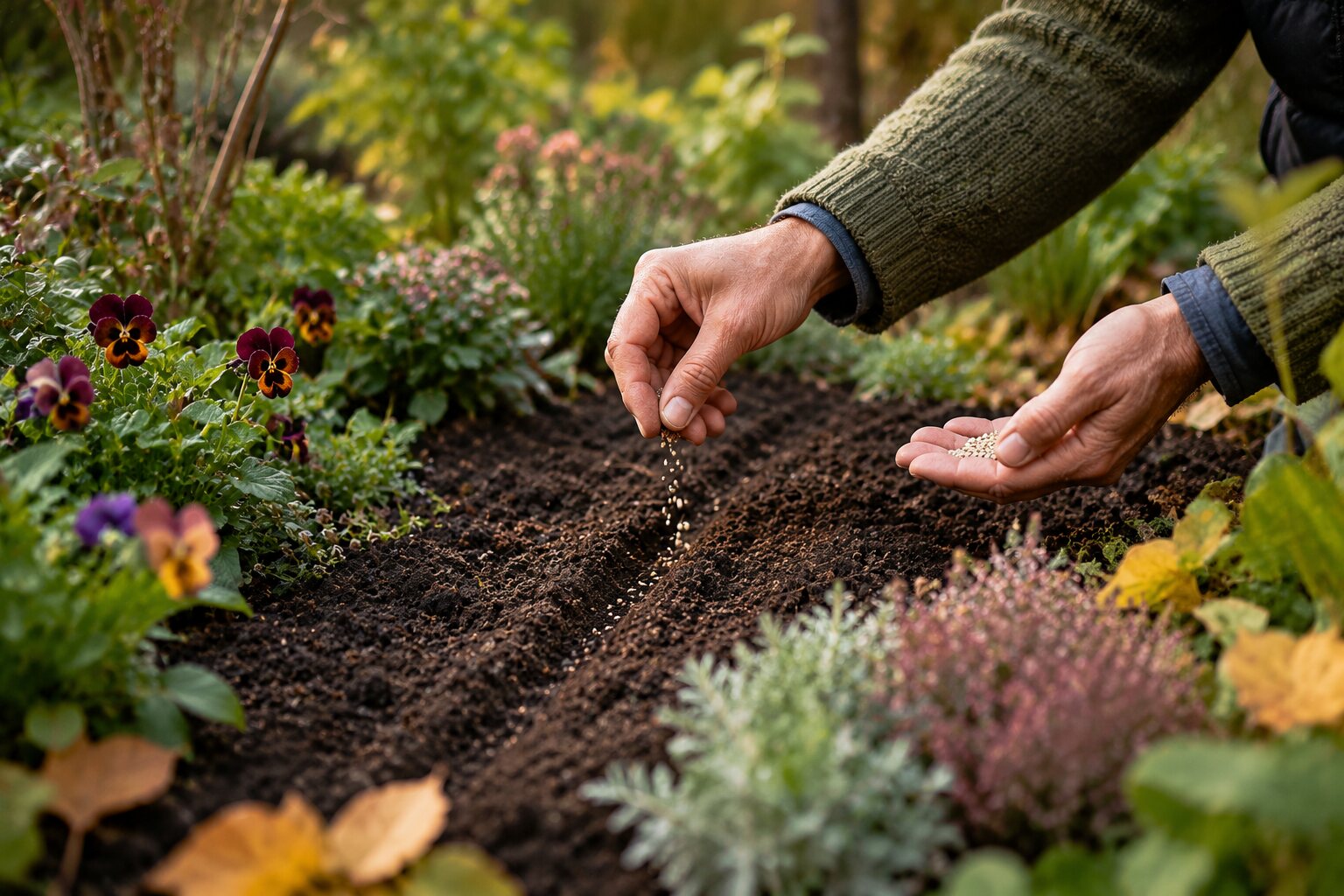
Loosen only the surface that needs preparation and remove large stones or coarse debris. Break down large clods, then rake the soil level. The aim is not an excessively soft bed but a relatively fine surface with good contact between seed and soil.
If the soil is very dry, water before sowing rather than trying to soak freshly sown seed afterwards.
Sowing directly into the border
For informal planting, seed can be scattered in small drifts. Where you want to distinguish seedlings from weeds more easily, shallow drills are useful. Sow more thinly than instinct suggests. Crowded seedlings usually need thinning later and can become weak if left competing for too long.
Cover according to the requirements of the species and water gently if the soil needs it. A label is valuable even in an informal border: months later it can prevent you from accidentally removing the plants you deliberately sowed.
An alternative: sow into modules
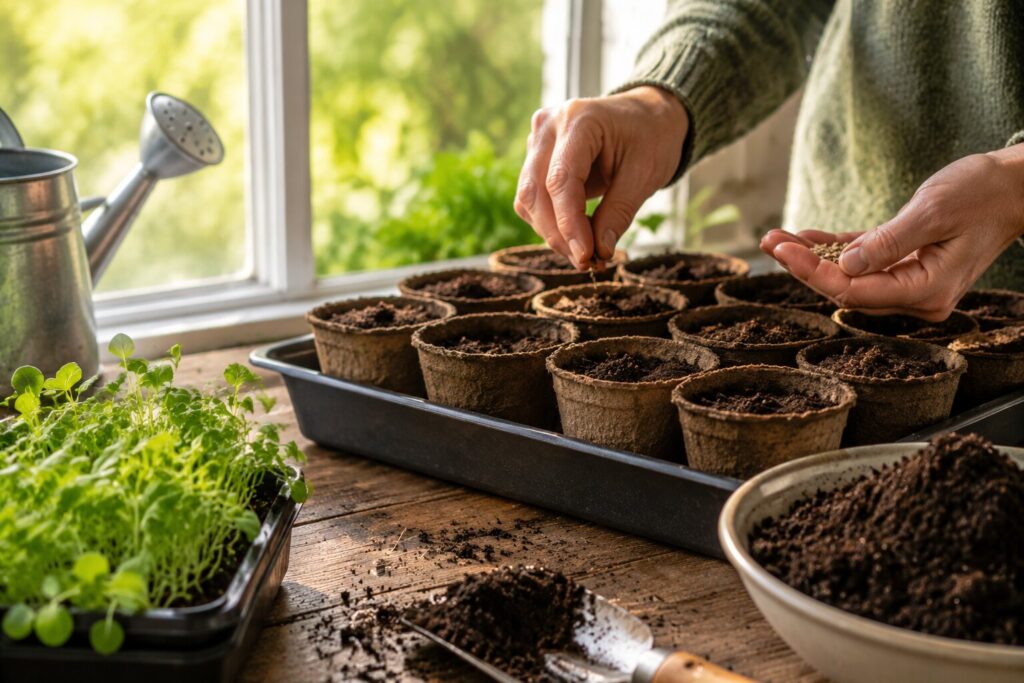
If slugs, winter wet or poor soil make direct sowing unreliable, use modules or small pots. Keep them in a cold frame, unheated greenhouse or another bright, sheltered position. The intention is protection from the worst weather rather than forcing rapid growth with heat.
Module-raised plants can be set out once conditions are suitable. Avoid allowing them to become root-bound while waiting for the border.
What happens over winter?
Some seedlings establish a small rosette and then appear to do very little. That is normal. Growth slows dramatically as temperature and day length fall. Strong autumn-sown plants are not supposed to become large before winter.
After severe frost, plants may look temporarily flattened or marked. Give them time before assuming they are lost. Hardy annuals can recover surprisingly well once conditions improve.
Thin early enough
Where direct-sown seedlings emerge densely, thin them once they can be handled. Leaving enough room between plants encourages branching and allows air to move through the group. The final spacing depends on the species and on whether you want individual specimen plants or a looser drift.
Spring care
As active growth resumes, check for weed competition and slug damage. Water only when conditions are genuinely dry. Plants rooted into the border from autumn are often better equipped to find moisture than newly planted spring seedlings.
Tall species may benefit from discreet support before they begin to lean. Adding support early is usually less conspicuous than trying to rescue mature stems after wind or heavy rain.
Why autumn sowing sometimes fails
- The seed was sown too early and produced excessive soft growth before winter.
- The site remained waterlogged for long periods.
- Seedlings were lost to slugs or birds soon after emergence.
- The species was not truly hardy enough for the conditions.
- Seed was sown too deeply or allowed to dry during germination.
Use autumn sowing as one part of the plan
There is no need to choose between autumn and spring sowing. Using both spreads risk and extends the flowering period. Sow a modest amount in autumn, see how it performs in your soil, then make a second sowing in spring. Over time this reveals which plants genuinely benefit from the earlier start in your garden.
For a wider seasonal approach, read Planting a garden for the seasons.