
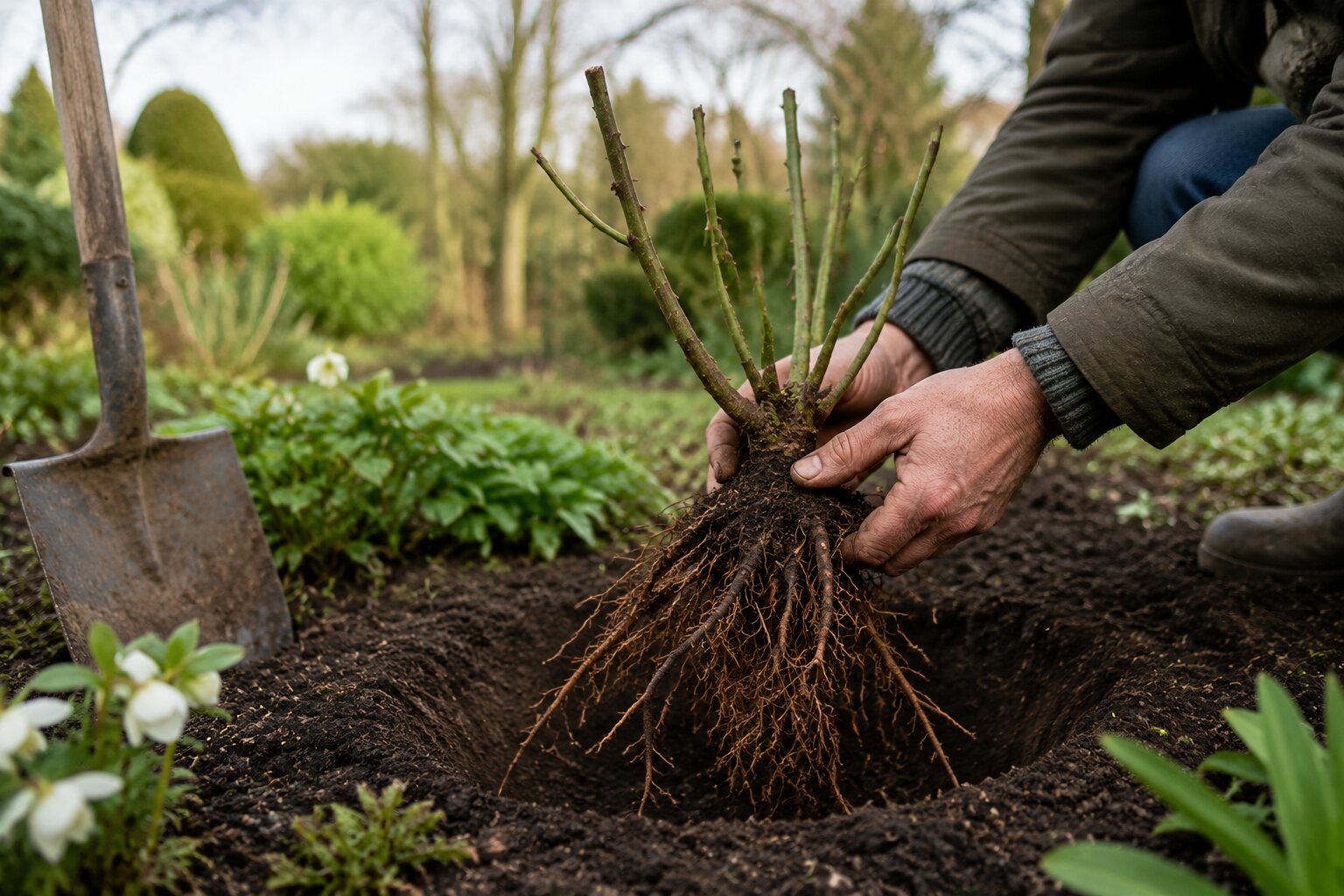
Bare-root plants arrive without a pot and with little or no compost around their roots. They may look less impressive than container-grown plants at first glance, but during the dormant season they can be an efficient, economical way to establish roses, hedging plants, shrubs and trees.
The important part is hidden below ground: healthy roots, careful planting and good contact with the surrounding soil. If those are right, a bare-root plant can establish quickly once growth resumes.
When to plant bare-root material
Bare-root plants are generally supplied while dormant, from autumn into winter and early spring. Plant when the soil is workable: not frozen, not waterlogged and not so dry that roots cannot establish properly.
Autumn planting often gives roots time to begin settling before spring growth. In colder or very wet gardens, later winter or early spring planting can sometimes be more practical.
Do not let the roots dry out
Bare roots have no pot of compost protecting them. Unpack the plant promptly and keep the roots cool and moist. If planting is delayed briefly, follow the nursery’s storage instructions rather than leaving the roots exposed to air, sun or wind.
Before planting, inspect the root system. Trim only roots that are genuinely damaged or broken, using clean sharp tools. Healthy roots should be preserved.
Prepare the whole planting area
Remove perennial weeds and loosen compacted soil around the intended planting position. A planting hole should be comfortably wide enough for the roots to spread naturally without being folded sharply back on themselves.
Digging an extremely deep hole and filling it with rich material is usually unnecessary. The plant eventually needs to grow into the surrounding garden soil, so improving the wider area is more useful than creating an isolated pocket.
1. Check the planting depth
Look for the previous soil mark on the stem where possible. Most shrubs should be replanted at approximately the depth they were growing before. Planting too deeply can reduce oxygen around the root system and bury stems that are not adapted to underground conditions.
With grafted roses, recommendations for the graft union can vary according to rose type, climate and nursery guidance. Follow the supplier’s instructions rather than applying one rule to every rose. Around soil level, or slightly below where specifically recommended, is common practice.
2. Spread the roots naturally
Hold the plant upright in the hole and arrange the roots so they radiate into the soil rather than circling or turning sharply upwards. Enlarge the hole if necessary. Cutting healthy roots simply to fit a hole is the wrong way round.
3. Backfill carefully
Return soil around and between the roots, gently shaking or adjusting the plant where useful so large air pockets do not remain. Firm progressively with your hands or light foot pressure. The aim is good soil-to-root contact without compacting wet soil into a hard mass.
4. Water after planting
Watering settles soil around the roots and ensures the planting zone begins evenly moist. Do this even during the dormant season when conditions are relatively dry.
Continue monitoring moisture during the first growing season. A plant that has begun producing leaves is losing water even if its new root system is still limited.
5. Mulch the root zone
A layer of suitable organic mulch can reduce evaporation, suppress competing weeds and gradually improve the surface soil. Keep mulch away from direct contact with stems and the crown.
Should you add fertiliser?
More feeding is not automatically better at planting time. Good soil preparation and moisture management are usually more important during initial establishment. Where fertiliser is appropriate, follow the requirements of the plant and product rather than adding a strong feed directly against bare roots.
The first growing season
Newly planted roses and shrubs should be checked regularly during dry spells. Deep, occasional watering that moistens the root zone is generally more useful than frequent superficial sprinkling.
Keep weeds and vigorous neighbouring plants from competing immediately around the new plant. Do not be alarmed if top growth initially seems modest: establishment below ground is the priority.
Common planting mistakes
- Allowing roots to dry out before planting.
- Forcing roots into a hole that is too narrow.
- Planting significantly deeper than the original soil line without a specific reason.
- Working waterlogged soil and destroying its structure.
- Assuming winter rain means a newly planted root zone can never become dry.
- Leaving grass or weeds to compete directly around the plant.
Choose for the site before you plant
Good planting technique cannot compensate indefinitely for the wrong plant in the wrong conditions. Light, soil moisture, mature size and exposure should all be considered before ordering. Bare-root planting works best when it is the final step in a good decision rather than an attempt to rescue a poor one.
See also Choosing plants for a sunny border and Planting a garden for the seasons.