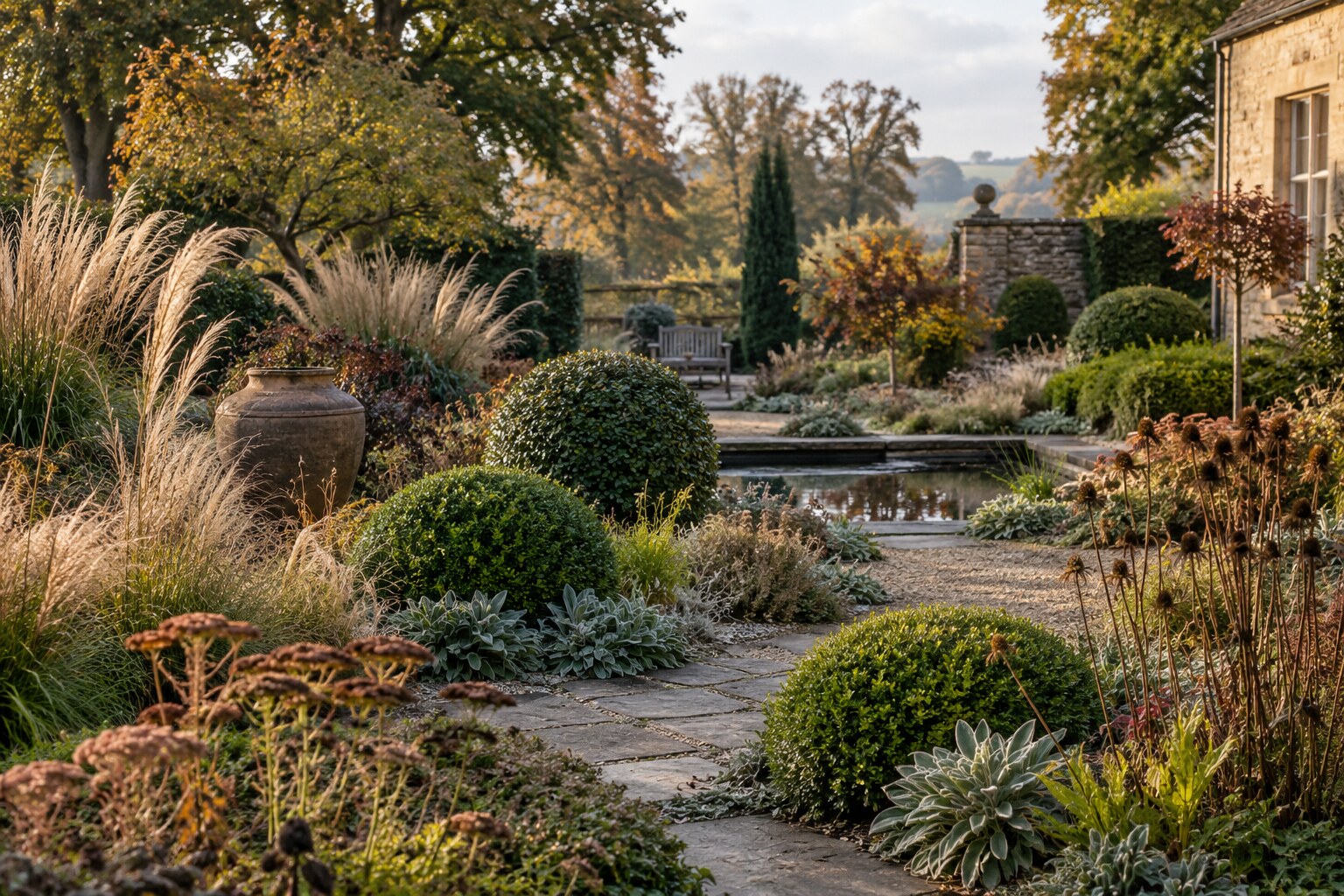
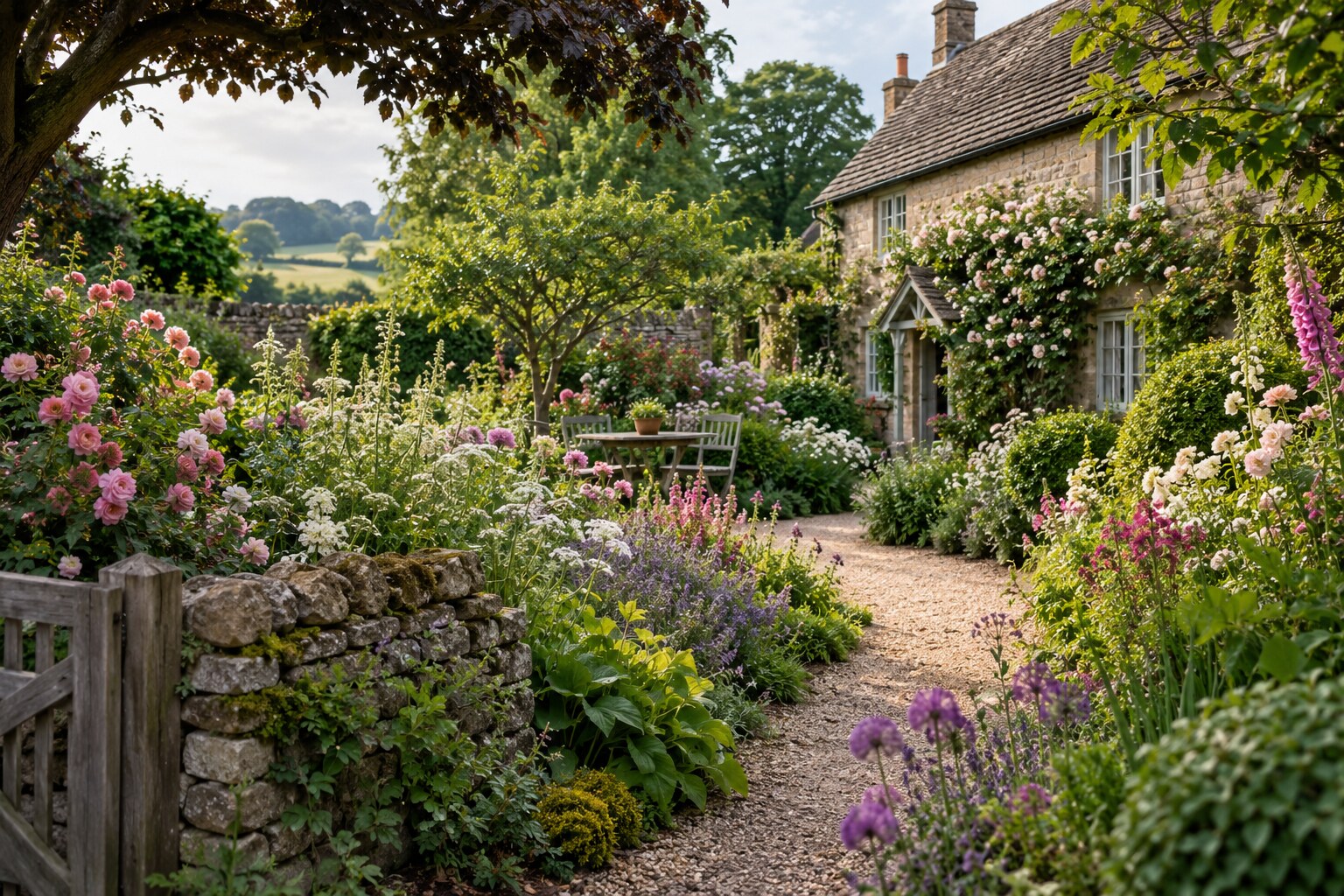
Cottage gardens are loved for their abundance: flowers leaning into paths, roses climbing through structures and different plants appearing to mingle almost by accident. Yet the gardens that feel most convincing are rarely accidental. Underneath the apparent informality is usually a clear framework of paths, hedges, walls, gates and repeated planting.
That balance between order and looseness is what makes the style so enduring. Structure keeps the garden readable; planting gives it life.
Begin with a framework
A cottage garden can tolerate an extraordinary amount of planting when its underlying structure is simple. A straight brick path, a gravel route between deep borders, a low hedge or a painted gate can provide enough order for plants to spill and self-seed without the garden feeling chaotic.
In a small garden, even one strong path may be sufficient. In a larger space, a series of enclosed areas can create the intimacy associated with traditional cottage gardens.
Build the planting in layers
The classic cottage border is not a flat row of flowers. It contains height and depth. Roses, climbers or taller shrubs create the upper layer. Foxgloves, delphiniums, verbascums or ornamental grasses can rise through the middle. Hardy geraniums, catmint, alchemilla and other lower plants soften the front of the border.
These plants do not have to be traditional. The principle matters more than the exact palette: combine different heights and shapes so that the planting feels full without becoming shapeless.
Repeat key plants
Abundance becomes convincing when certain plants recur. A rose repeated along a boundary, the same geranium appearing in several places or a recurring silver foliage plant can quietly connect the whole garden.
This repetition is what allows more spontaneous elements to appear around them. Seedlings and temporary gaps are easier to accept when the garden has a recognisable rhythm.
Use colour with restraint
Cottage planting is often colourful, but that does not mean every colour has to be present. Limiting the palette can make the garden feel richer rather than poorer. Soft pinks, whites and purples may create a romantic atmosphere, while stronger reds, oranges and yellows produce something warmer and more energetic.
Green remains the most important colour. Foliage is what holds the planting together before and after flowering.
Plan a succession, not one perfect month
A garden that reaches its peak in June and then collapses can feel surprisingly short-lived. Bulbs can begin the season, followed by early perennials and flowering shrubs, then roses and summer plants, with later perennials, grasses and seedheads carrying the garden into autumn.
Planting a garden for the seasons is useful when planning this kind of succession, while Planting bulbs for spring can help extend the beginning of the season.
Mix ornament and usefulness
Cottage gardens traditionally blurred the distinction between ornamental and useful plants. Herbs, fruit, vegetables and flowers could share the same space. That idea still works beautifully today.
Chives, fennel, parsley and other herbs can contribute flowers and texture as well as being useful in the kitchen. See Growing herbs close to the kitchen for ideas that work particularly well in compact gardens.
Allow some imperfection
The attraction of this style comes partly from movement and change. A plant may lean further into the path one year. A self-sown foxglove may appear somewhere unexpected. A rose may reach into a neighbouring shrub.
Edit when necessary, but do not remove every surprise. A cottage garden should feel cultivated without looking controlled to the centimetre.
If you are planning the planting from scratch, continue with Choosing plants for a sunny border.