
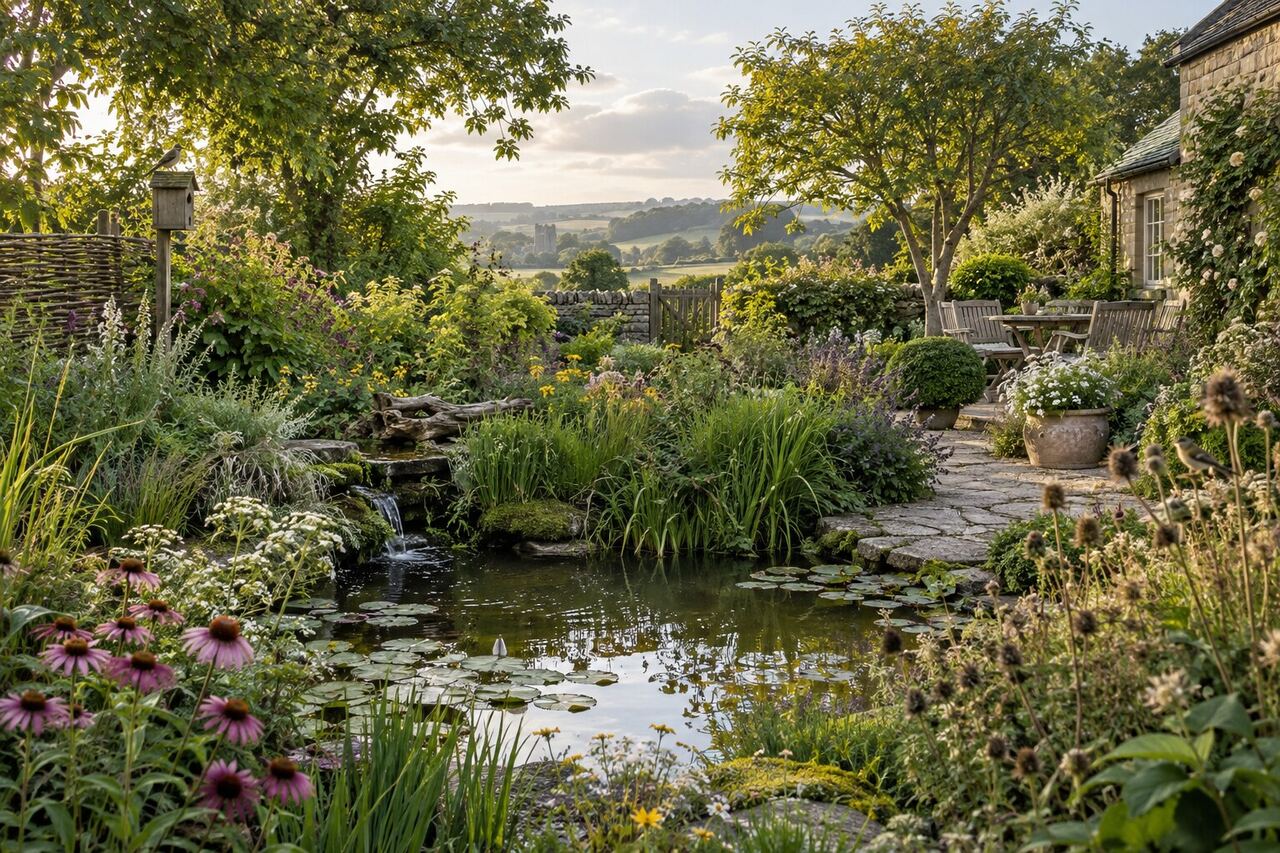
A garden designed for wildlife does not need to look abandoned, nor does a well-designed garden need to be ecologically sterile. Some of the same qualities that make a garden visually rich — layers, seasonal change, water, shelter and diverse planting — also create useful habitat.
The most successful approach is to make wildlife part of the design from the beginning rather than treating it as a collection of accessories added afterwards.
Think in habitat rather than products
Insect hotels, feeders and nesting boxes can all have a place, but the foundation of a wildlife-friendly garden is habitat. What can live, feed, hide, drink or overwinter there?
A hedge can provide shelter and nesting space. Flowering plants can feed pollinators. A small tree can offer height, shade, structure and food. Leaf litter and perennial stems can provide quieter places through winter.
Plant for a sequence of flowers
A long flowering season is usually more useful than one spectacular peak. Spring bulbs and flowering shrubs can start the year, followed by perennials, herbs and later-flowering plants through summer and autumn.
Different flower forms support different insects, so variation is useful. The overall scheme can still be visually restrained through repetition and a controlled colour palette.
Use layers
A garden containing trees, shrubs, climbers, perennials and lower planting offers more habitat than a flat layer of lawn and paving. Those layers also create depth and make the garden visually more interesting.
Where space is limited, climbers and trained shrubs are particularly useful because they create habitat vertically without requiring a large footprint.
Add water if you can
Water can transform the ecological value of a garden. It does not require a large formal pond. A smaller wildlife pond or carefully designed water feature can support insects and birds while adding reflected light and movement to the garden.
Make sure wildlife can enter and leave safely and avoid unnecessarily deep, steep-sided containers.
Leave some material standing
Autumn does not have to trigger complete clearance. Hollow stems, seedheads, grasses and dry perennial growth can remain valuable through winter.
This material can also look beautiful in low light and frost, particularly when the planting has been designed with structure in mind.
Keep the design readable
Wildlife-friendly does not mean that paths disappear or vigorous plants are allowed to overwhelm everything. Clear edges and routes can coexist with relaxed planting. In fact, a strong structural framework often makes naturalistic or wildlife-focused areas look more intentional.
Tidy selectively
Remove diseased material, control invasive plants and keep access clear. Elsewhere, ask whether a task is actually necessary before doing it. Fallen leaves can sometimes remain beneath hedges and shrubs. Seedheads can stand. A quieter part of the garden can stay undisturbed for longer.
See What to do with fallen leaves and Should you leave part of the lawn unmown? for practical examples.
Make ecology and appearance reinforce each other
The strongest wildlife gardens do not separate beauty from usefulness. A flowering hedge can define a boundary and offer shelter. A naturalistic border can provide food while creating movement and seasonal structure. A tree can frame a view and support birds and insects at the same time.
When one element performs several roles, the garden becomes both more resilient and more convincing.
Continue with Making more room for wildlife for further practical ideas.