
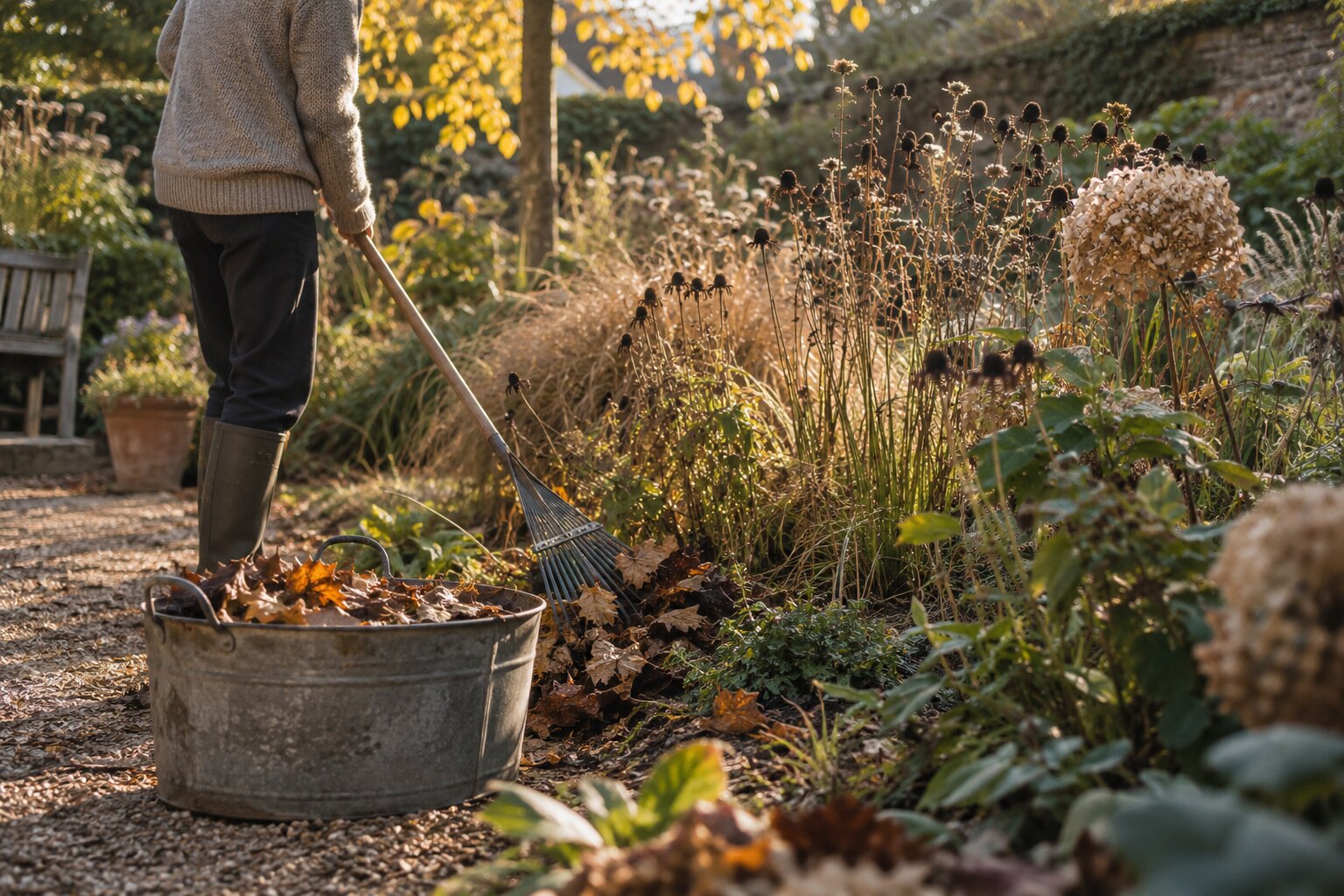
Autumn used to be treated as the season for clearing the garden completely. Borders were cut to the ground, leaves were removed and every dead stem disappeared. A more selective approach is usually better for the garden and often looks better too.
The aim is to remove what is genuinely diseased, dangerous or obstructive while leaving useful structure, seed heads and habitat where they can remain through winter.
Start with what must be removed
Diseased plant material deserves priority. Leaves and stems badly affected by certain diseases should not simply be left in place where they may contribute to future problems.
Also remove collapsed growth from paths and access routes, broken branches and plants that are smothering small neighbours.
Leave healthy perennial stems where useful
Many ornamental grasses and perennials retain attractive structure through winter. Their seed heads catch low light and frost, while hollow stems and dense growth can shelter insects.
Leaving these plants until late winter or early spring can extend the visual season and provide habitat at the same time.
Do not remove every fallen leaf
Leaves on paths, lawns and low evergreen plants may need clearing. Elsewhere they can be useful organic material.
Move leaves from places where they cause problems into borders, under hedges or into a leaf-mould system rather than treating them automatically as waste.
Keep lawns usable
A thick wet layer of leaves can weaken grass, so lawns generally benefit from regular clearing during heavy leaf fall.
Where desired, leave some less formal grass longer into winter rather than forcing the entire garden into the same management regime.
Cut back plants that become a problem
Not every dead perennial deserves to stay. Some collapse into a wet mass, hide paths or create ideal shelter directly around vulnerable crowns.
Remove those selectively. The goal is not a rule that everything stays; it is choosing deliberately.
Avoid disturbing the soil unnecessarily
Autumn does not require every border to be deeply dug. Unless there is a specific reason, leave established soil structure intact.
Remove perennial weeds carefully and mulch suitable areas instead of turning the whole border over.
Check supports and ties
Wind and winter weather expose weak supports. Check tree ties, climbing plant supports and stakes before storms make small problems larger.
Loosen ties that are beginning to cut into stems and replace damaged supports.
Protect vulnerable pots
Containers are more exposed to frost because roots are surrounded by less insulating soil. Move vulnerable plants to more sheltered positions where appropriate and make sure drainage holes remain clear.
Clean tools as the season slows
Autumn is a useful time to clean soil from spades, forks and hand tools and check wooden handles, blades and moving parts. Tools stored clean and dry are easier to put back into service in spring.
Leave food and shelter for wildlife
Seed heads, leaf litter and dense planting all support wildlife through the colder months. A perfectly bare border offers very little shelter.
Even a tidy garden can leave selected areas less disturbed.
The garden does not need to look abandoned
Selective autumn care can still look deliberate. Keep paths clear, edge important spaces, remove broken material and retain the strongest winter silhouettes.
A good autumn garden is not one where nothing has been done. It is one where the right things have been left alone.
See What to do with fallen leaves, Preparing the garden for winter, Making more room for wildlife and Keeping garden tools in good condition.